AOPA Rod Machado article

  • Thread starter Thread starter Roger, Roger
  • Start date Start date
But were they ever required to go through an introductory aerodynamics course?

Went through the same aero courses we all did. Saw all the equation stuff and it made sense then. But the equation knowledge isn't used day-to-day for anything after that, besides initially gaining the knowledge, so it goes by the wayside for other more important knowledge such as weapons and tactics info to take its place. Thats the combat pilot, ie- me. In-depth Aero knowledge/equations is nice-to-know.

The test pilot went through the same aero courses and has a technical degree which may or my not be Aero Engineering. For the test pilot who's in airframe test (as opposed to weapons test, for example), those guys live by the engineering mathmatical knowledge, so for them it is their bread and butter and is much more retained if just for the fact that their work revolves around it. Which completely makes sense. In depth Aero knowledge/equation is definitely need-to-know.

Two USAF pilots, two completely different sets of what's important and what isn't. And neither is wrong for his particular application. Need-to-know vs nice-to-know.
 
That's why Kristi is cool - she's a creature with boobs that also mastered math well enough to gain entry into the engineering field. A close friend of mine and I are thinking of trying to do something here to bring mathematically gifted females in town together with adolescent girls to keep the love of math alive and help create an organization that each public and private school can have as a "club" that would bring these women together with female students at the school. We are still developing this idea but we both have gifted math girls and it seems to be a need. Kristi would be an example of someone we'd like to have serve as a mentor - she is fun, feminine woman but also obviously knows math - that's a roll model.

This is all just part of some grand ruse so that you can kidnap Danica McKellar. :hiya:
 
Went through the same aero courses we all did. Saw all the equation stuff and it made sense then. Went through the same aero courses we all did. Saw all the equation stuff and it made sense then.

Which is my point. Apparently the elite pilot training curriculae in this country consider it beneficial for their pilots to be exposed to this subject matter, regardless of whether or not they can work the equations later in their careers. I agree. Failing to recall the exact equations doesn't mean that this knowledge falls into the "nice-to-know" category; the math often serves a purpose by providing a degree of precision in learning and teaching the concepts and applying them in a consistent, coherent fashion.

The penalty that the GA community pays for not having this mathematical discipline isn't merely that they don't know the formulas, but rather that they usually don't have a basic understanding of the phenomena being discussed, to the point of being incoherent on the subject. Perhaps this is acceptable for a private pilot, but I don't consider it so for someone who is supposed to teach others.
 
Which is my point. Apparently the elite pilot training curriculae in this country consider it beneficial for their pilots to be exposed to this subject matter, regardless of whether or not they can work the equations later in their careers. I agree. Failing to recall the exact equations doesn't mean that this knowledge falls into the "nice-to-know" category; the math often serves a purpose by providing a degree of precision in learning and teaching the concepts and applying them in a consistent, coherent fashion.

For the combat guy, they very much fall in the "nice-to-know" category, as they aren't primary to what we do. Does that mean they're unimportant? No. But they're not critical for use beyond initial learning of the info. Thats the difference. For dogfighting, for example, I don't care what lift equations etc, etc are. What I do care about is knowing where my lift vector is (through the canopy), and where to roll to place it where I want the jet to go prior to pulling and putting the jet there. As well as knowing how to keep the nose tracking and what not to do regards that (nose position vs energy).....basically maneuvering in relation to the bandit. All of that is done through SA and hands. The rest is "nice-to-know" at that point. For an academic discussion on the ground, it's still "nice-to-know" since the practical aspects of what we're doing is whats important, not necessarily the math behind it, as we try to keep it simple. Again, it doesn't mean it's bad info, it's just not wholly useful in that arena at that time; as it would be fore the aforementioned test pilot. Everything has its place. If we wanted to delve into the nitty-gritty, then it'd be time to take out the old books and start reviewing the math within them. But I gurarantee that that mathmatical info isn't on the brain of the average combat pilot who doesn't have an aero degree already, even though we all learned it initially.

The penalty that the GA community pays for not having this mathematical discipline isn't merely that they don't know the formulas, but rather that they usually don't have a basic understanding of the phenomena being discussed, to the point of being incoherent on the subject. Perhaps this is acceptable for a private pilot, but I don't consider it so for someone who is supposed to teach others.

Again, its great information and very useful. I don't think it makes one a bad or unsafe pilot by not knowing it, but it definitely makes one a more informed pilot by knowing it and understanding it. So it's good knowledge. In fact, I don't think there really is bad knowledge, only how its taught and how much a recipient is willing to retain or try and understand. Still, it doesn't hurt to learn IMO.
 
Again, its great information and very useful. I don't think it makes one a bad or unsafe pilot by not knowing it, but it definitely makes one a more informed pilot by knowing it and understanding it.

A somewhat contradictory statement, but overall an endorsement of my point of view. ;-) "Bad" and "unsafe" don't have any intrinsic meaning, but are only points on a continuum. The more knowledge you have, the more you slide from the "bad" end of the spectrum to the "good" one, all things being equal.
 
A somewhat contradictory statement, but overall an endorsement of my point of view. ;-) "Bad" and "unsafe" don't have any intrinsic meaning, but are only points on a continuum. The more knowledge you have, the more you slide from the "bad" end of the spectrum to the "good" one, all things being equal.

Like I said, it has its place and is useful for initial training or for someone who does it as a job, as a test pilot. For others, its not something that will likely be used again. But if someone does happen to need equation and math stuff after ram-dumping it, thats what books are there for. I ram-dumped the math/equation stuff a long time ago, but then again its not something I'm teaching or operationally using, so its of no matter. It's situational. :) And if I want to teach it or operationally use it, I'll have to hit the books again.
 
Perhaps this is acceptable for a private pilot, but I don't consider it so for someone who is supposed to teach others.

I'd like to clarify my earlier statement, since it was poorly worded on my part. I believe professional pilots should, at some point, have learned some basic aerodynamics. I believe studying flight dynamics to the level of that was known to the Wright Brothers, now over 100 years ago, isn't much to ask of professional pilots today.

For those who have read the book Emergency Maneuver Training, this is the simplistic nature of flight dynamics I'd expect of any professional pilot. There is one mathematical formula in that book, which after being introduced the reader is told to ignore the math.

Consider this, the book mentioned above is approximately 200 pages. It took me under 5 hours to go through, but then again it was a review. Teachers are told to expect students to take 4 to 5 times as long on material, so let's say 30 hours. Less than the hours one puts in in a typical work week to understand the basic science that regulates their profession. Spread out to an hour a day would take a mere month. Really not too much to ask of a professional I don't think. Do you?

Do remember, aviation is both a science and an art. If one can't be bothered with learning both halves then they should not put the lives of others in their hands. It is down right irresponsible.
 
I think for someone who went through that sort of training, it's something they use every time they step into the airplane, they just don't realize it.

The actual equations and math? No. The actual aerodynamic knowledge in raw form? Yes, subconsiously......as you're flying the airplane within limits that no math equation is necessarily telling you, but moreso from parameters that you feel and situational awareness you have.......you're not really looking at instruments or flying particular parameters with the exception of velocity, but even that will eventually drop out of the crosscheck when in the merge in a dogfight and all your attention is outside maneuvering against the other aircraft, and avoiding hitting him or the ground. So do the math equations happen to get applied almost by accident? Sure. Are they on the mind at the time? Not at all. They're the prep that sets the understanding back on the ground, where they belong (unless you're a test guy, of course). They, along with the aero you've learned, do however help set the stage for the second nature maneuvering of the aircraft that I'm doing in the cockpit. No average civilian guy has to fly his aircraft like this, they're normally straight and level with little to do but drone, so the workload is generally lower and time is spent monitoring things like instruments and the like.

Think of it like this: In a dogfight or air-ground maneuvering, I'm speaking the aircraft's language, listening to what its telling me, and reacting to that. At that particular time while airborne, I'm only concerned with what the aircraft is telling me, I'm not at all concerned with where or how I learned that language in the first place. It has no place there at that time in the cockpit, and is not even remotely important at that point in time when I'm trying to survive. However, without having learned the language at all, way back when; I'd likely not be able to communicate and speak the language as well with the aircraft at this point in time now. There is always an intertwining between the two; but thats not in contention here.

So each has its place. The math equations don't even come up in any brief or debrief, as they're not a practical part of what we're doing (we're not doing flight test). Are we indirectly using them up there? Sure. Everything we do can likely be recreated in an aerodynamic math equation somehow, so it's not like they don't exist. It's just not our focus and not on the mind....we're "feel the aircraft and have the SA to know what its telling you, because its constantly talking to you".

Of course the math is there, it always be with the concept of flight. No physical way around it or to avoid it. It's just how the different pilots, combat vs test, subconsciously or consciously use it while airborne, respectively. Each has its place at particular times, and each will always complement the other.

And yes, I'd still need to hit the books to rehack some of the old knowledge that used to be there. My 386 RAM memory is limited, so I have to prioritize the info stored in there. :D
 
When I learned to fly, 50 years ago, in a taildragger, at a non-towered airport, with a happy, retiring WWII instructor, the general idea was to solo in 10 hours. I did not know then how lucky I was to be presented with those ideal conditions for learning a new environment.

The taildragger, a Super-Cub, was king of the trainers, in it's day. A non-towered, and not-busy airport negated any need for radio skill or knowledge. Didn't have 'em. The instructor was there to teach me. He liked being there.

I learned strictly about the nuts-and-bolts of operating the airplane: much like learning to operate a tractor, or forklift. This was a 'hands-on' learning experience; as I learned a couple of years later, training to be a CFI, is Primacy.

Primacy, as I have learned from a long happy life as a happy CFI, is probably the most important part of our learning experiences.

"What is learned first, is learned best."

When I solo'ed, I only knew the rote knee-jerk responses to flying the airplane from take-off to landing. The instructor signed my logbook after I landed, but I had no knowledge of paperwork or weight and balance or weather or...

I simply had the skill to keep that nose on the centerline with the rudder, and control the left/right drift with the stick, and feel the elevator back pressure to float it in the round-out to kiss all three tires onto the pavement as it stalled.

And not rest there, but keep flying that rudder and stick down the runway until I was parked.

That took me 11 and 1/2 hours, and the rest of my flying life has been about...

(As Paul Harvey would say) ..."The reest of the story." Flight Training is divided into two different categories:

Primary, and Advanced. In Primary, we learn just basic knee-jerk responses like walking: walking requires tedious repeated efforts at controlling eye-hand/foot responses so that these physical responses will become automatic so that you can get up from your reading position right now and walk out of the room without ever consciously thinking of how to make the necessary body movements to do that. Your mind is totally absorbed with the other matter of why you are getting up.

This is Primary flight Training. How to control the up/down left/right for/aft motion of the airplane with the same automatic instincts as we do when we walk.

Theeen, we start learning about what we can do with this skill: what, when where, why, how, and, so on.

When you first load up the skill learning activity with 'other' related knowledge, you risk causing a perception in the student the the skill requires the knowledge, and it does not.

Preconceived knowledge can be loaded with negative transfer. The easiest students are the ones who know nothing; they are wide open and thirsty for knowledge, and skill. It is a delicate balance to keep the skill and knowledge going hand-in-hand, but I have found that the primary purpose of primary training should be the initial development of the primary rote skill response of rudder/elevator/aileron and throttle with no attention at all on other 'rules, procedures, checklists, etc.'.

As I said in the beginning, I was lucky to be born into that kind of environment. It is hard to do that these days in our high-paced high-tech environment. It could never be done at a busy pilot school. Not in the 'purist' way that I had it. I had nothing to learn but how to fly the plane. But the system of learning to control an airplane would be benefited by having primary training in a tailwheel because Nature, not your Instructor, would teach you how to use the rudder during the..wait, I mean all the controls, during the take-off, initial climb, short final, flare, touchdown, roll-out, and taxi. If you're taxiing in the wind, you're flying. You can feel the little airplane lean if you don't have the aileron into it. You can feel it try to weathervane if you don't hold the rudder into it. You can feel it try to nose over of you don't hold the elevator back~ so you're flyin' that little tailwheel the whole time you are moving. You're learning those Primary control movements constantly..untill they become a part of you.

Then go learn about all the other stuff before you leave the pattern and kill youself.

And to set the record straight, that 11 1/2 hours was tach time. That would have been 14 or 15 hours hobbs time, and would have been more like 20+ hours at a towered airport.
 
And to set the record straight, that 11 1/2 hours was tach time. That would have been 14 or 15 hours hobbs time, and would have been more like 20+ hours at a towered airport.

Well that sure makes a difference. I keep hearing guys say, "we used to solo in 5 to 10 hours..." Nobody ever said they were referring to tach hours and not hobbs hours!

MikeD said:
They're the prep that sets the understanding back on the ground

Exactly! This information has it's place in the academics of aviation. Any argument to the contrary is arrogant. Just like any form of training, though, the intricacies of this knowledge will fade away. What remains is the concrete techniques that such knowledge helped the pilot attain.

Techniques that were not just done to be done, but were understood. Without this understanding their application could never be truly concrete. Eventually, such as in an emergency, we always fall back on what is understood to be true; regardless of it's truth.
 
Which is what I said, so I'll summarize your post as "yes". ;-)

Again, not that easy. Time and place. It's all about time and place. I guarantee if I took you or shdw up in a fighter on an ACM sortie, you'd be so busy that even you guys would temporarily place the math equations on the backburner, you'd have no choice not to with everything going on and the resultant SA overload.......that is, if you wanted to survive. :)

Exactly! This information has it's place in the academics of aviation. Any argument to the contrary is arrogant. Just like any form of training, though, the intricacies of this knowledge will fade away. What remains is the concrete techniques that such knowledge helped the pilot attain.

Techniques that were not just done to be done, but were understood. Without this understanding their application could never be truly concrete. Eventually, such as in an emergency, we always fall back on what is understood to be true; regardless of it's truth.

I'm not at all arguing that it doesn't have a place in the academics of aviation, it certainly does. But as I said before, it has its time and place. Thats what you guys need to understand. And too that if someone doesn't know it, it doesn't make them an unsafe or less proficient pilot. Less informed overall? Sure. But thats about it. :)

No one is arguing (I hope) that the math and the practicality don't complement each other. They do and always will.

The academia folks can't make the argument all about themselves, anymore than the anti-academia folks can.
 
Yes, they are.

:yeahthat: Though it seems we'd agree, basic flight dynamics is an integral part of a complete training curricula. On the subject, I suspect military teaches this to their pilots early in training. Mike, is this accurate?
 
Yes, they are.

Never did I say math belongs nowhere in the discussion. All I'm saying is that one doesn't need to be an engineer or even have college-level understanding of math in order to be a safe and proficient pilot. While math can be used in the discussion of aerodynamics, it doesn't need to be the be-all-end-all (the only way, if you will) - Is that really so hard to agree with? The math behind everything sure can "prove" things (That's the point of math, right? To prove stuff?), but if the student sees it as having little to no practical application, and doesn't give them any insight as to how to fly the airplane better or safer, then what's the point? That's when the math equations fall into the "nice to know" category. It's not your job to give your students a proper "world view," it's your job to adjust to their learning style and teach them in a way that they can understand and make them a better pilot. I'll go even as far as saying that it's OK to give a student something that is scientifically or theoretically "wrong" if it helps them understand the big picture of how something works - Take explaining the aircraft's electrical system as a water system, with the alternator being the water pump and the battery being the reserve pump. Or take explaining the operation of the altimeter as if it were a balloon. Get my point?

I'm sure it's different in the military, where I bet things are force fed to you (I have no military experience, so maybe someone else can speak for me), but even at the professional aviation program that I attended during college, where we were all introduced to jet engines, advanced aircraft systems and high altitude operations, not once did any discussion revolve around math, and this is coming from highly experienced members of the aviation industry - Airline captains, corporate pilots, ex-military pilots, line check airmen, etc.

The problem I have with your argument Tgray is that you instruct in general aviation, not the military or a "higher institution of learning." As George Carlin once said: "Think about how [smart] the average person is, and realize that half of them are stupider than that." While you've inferred that US citizens lack in math skills, not once have you stated that your teaching style or "method" isn't appropriate for every situation. You've even said that any style other than yours is flat out "wrong" and that anybody who disagrees with you is "mistaken." That's why I spoke up.

 
Never did I say math belongs nowhere in the discussion. All I'm saying is that one doesn't need to be an engineer or even have college-level understanding of math in order to be a safe and proficient pilot.

What about high school?

We haven't been talking about being an engineer, or even attending college. The equations presented are simple and needn't even be solved. Sure you can run the numbers along side your teacher, if interested. However, the real purpose is to understand the relationships, realize why things happen the way they do. For that, no math beyond highschool is necessary.

All that's required is an open mind, some thought, and the willingness to ask questions. Let me tell you, had these 8 pages been on understanding the one formula presented over 100 posts ago, readers would have long since understood it. Instead we bicker over complexity and worth rather than attempt to see simplicity.
 
What about high school?

the real purpose is to understand the relationships, realize why things happen the way they do.

And you don't even need a high-school level understanding of math to do that. The only math I have ever been required to do as a pilot has involved basic addition, subtraction, division or multiplication. That and basic interpolation for performance calculations.

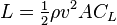
db7735d03f8de6082982164856a0d8ba.png
.

If you showed that to a brand new flight student I bet their head would start spinning.

Now if you withheld the formula told them that lift is a combination of airspeed, air density, surface area , angle of attack,etc. and defined those things individually, as well as showed them in the airplane what happens when you change one of those things, then I bet that will more likely than not make more sense than throwing a formula at them on a white board. No math or equations involved. Sure, the components of lift and aerodynamics can be explained using mathematical terms, but not everything is most easily understood by students that way.

I agree with those who say most things, if not everything can be examined and defined from a mathematical perspective. Conversely, most things, if not everything can also be examined and defined from a verbal or visual perspective. No way is the "best" way to teach anything. It all depends on the student's learning style co-existing with one's teaching style.

I agree with you shdw about the bickering over complexity; it doesn't do anything really. But nobody should claim that one way is the best or only way to do anything, especially when it comes to one's teaching style. Aviation can be defined as a science, but it also can be defined as an art form, and as MikeD said, everything has its time and place. Math does have its place in aviation and certainly when talking about lift and aerodynamics in general it can be used as an effective learning tool, but I'm not going to say that it is the best tool. In my opinion there is no best tool.

And I'll also agree with you that myself and many others should take time to be a little more open and understanding when it comes to things we don't know. But, with math especially, teachers and instructors all too often fail to make the connection between theory and practice. And when that connection isn't there, interest is lost.
 
FDX8891 said:
If you showed that to a brand new flight student I bet their head would start spinning.

Statistically, 1 in 4 people would prefer this approach. As I said to mshunter, it is hard to see a method one type of people might prefer if you yourself wish to avoid it.

No way is the "best" way to teach anything.

We've merely proposed using as many ways as possible. Then again, for an instructor to do this they must take the time to understand more than one way.

I agree with you shdw about the bickering over complexity; it doesn't do anything really.

Maybe so, and I really mean no offense or to be a wise ass here, but the majority of this reply speaks to the contrary.

but I'm not going to say that it is the best tool. In my opinion there is no best tool.

I'd agree, but I would claim it an essential tool, along with all the others.

And I'll also agree with you that myself and many others should take time to be a little more open and understanding when it comes to things we don't know. But, with math especially, teachers and instructors all too often fail to make the connection between theory and practice. And when that connection isn't there, interest is lost.

Wellllll then, maybe next time we meet over this subject it can be a discussion about the subject.
 
Back
Top