Single Engine or Twin?

@drunkenbeagle and @z987k are missing the point. The man is a professional pilot and wants an airplane to go from point A to point B as safely as possible because he can afford it. Obviously having two pilots is better than one. But that's not realistic. The point of having your own plane is convenience. Having to hire someone to fly with you kills a lot of that. So it comes down to minimizing all the risk you can and that means having two engines with all the redundant systems they bring. He's not a weekend warrior who will be in over his head if he loses one on takeoff. He is a professional who knows how to handle himself and the airplane. Having two engines means he can fly in IMC and at night without having to worry about having an engine quit and most likely killing himself and his family. Buying a twin is the smartest choice to make in the situation he is in.
 
So it comes down to minimizing all the risk you can and that means having two engines with all the redundant systems they bring. He's not a weekend warrior who will be in over his head if he loses one on takeoff. He is a professional who knows how to handle himself and the airplane.

The numbers do not in fact agree with your opinion. Also, having a commercial or ATP certificate does not make one immune to the stupid human tricks that pilots fall victim to - only about half of fatal accidents are with private pilots flying.

Minimizing risks begins with first understanding what the risks are. The risks in GA (single or twins) are overwhelmingly from flight planning, fuel management, weather and loss of control. I can assure you, everyone thinks they are "a professional who knows ho to handle himself and the airplane." Right up until they wreck an airplane.
 
I don't fly twins, don't see how I am relevant here. But of those thousands of hours, how many of them were instructing in light twins? How much of that experience was recent? How much of it was at max gross at high density altitudes? How much was single pilot? How many were personal use, and not for instruction?

I certainly agree that not having time in twins adds risk. But most twins aren't operated by low time private pilots. Of the 33 fatal accidents I just looked at in the NTSB database from last year, ONE was operated by a private pilot. The others were all "professional pilots."

If light twins really were that much safer, the insurance would be cheaper (it isn't). And the fatality rate would be lower (it isn't). And "professional pilots" would not be involved in the majority of the fatal multi accidents (they are).
 
I suspect two other causes are at play.

1. While fatal accidents are far more common in twins, accidents in general are less common. So the actual cost in paying claims may well be about the same.

2. There aren't a huge number of twins being operated, relative to the larger business of insuring singles. So it may not be possible to price the risk as accurately, but is less of a concern in underwriting, based on the low overall number of policies. I suspect prices are set more by the history of the individual policy holders, but that is speculation.
 
The single vs twin debate is one of those issues that pits emotions vs facts and where conventional wisdom is quite often wrong.

First off the facts.

The speed and payload advantage for the second engine is usually not worth the added expense. Typically you will get less than 20kts of added airspeed and 15% more useful load. Compare a Saratoga vs Senneca, and you see that there is only a marginal improvement with a second engine.All the added equipment such as deice, radar, ect that you can carry on a twin will rapidly eat up the additional useful load.The added cost of flying a twin are substantial. The general rule of thumb is to take the comparable single and multiply 2x the fuel, 3x the maintenance, and 4X for the insurance.

Per hours flown, the fatal accident rate in twin engine planes is worse than singles. As beagle noted, engine failure rarely the cause of airplane accidents. Most of the root causes of accidents (such as fuel) are common to both types.

On the plus side you can traverse hostile terrain such as cold water (which I would never try in a single). Added deice equipment can allow you to fly in more marginal conditions.


Now for the emotions,

Many pilots (particularly pros) are used to operating with two and just feel safer with two motors. Many passengers feel also feel safer with two engines.

Flying a twin is nice for the ego.

If you don't feel safe in any airplane, you won't fly it very much. Long periods of time sitting in the hagar will lead to poor mechanical condition, which is in fact less safe.


In the end, owning a twin is an emotional decision and all the facts and actuarial tables in the world will not sway anyone's opinion or decision. If you feel safer with two engines and you can afford it, then by all means buy one. For myself, I would have a hard time justifying the added expense of a twin for such a small increase in utility.


All the above arguments also apply to the VLJ vs turboprop argument. A Kingair outperforms most VLJs on the market, but many people just want to fly a jet instead of those "little prop jobs".
 
If money isn't an issue this isn't even a question, twin all day. Imagine how upset you'd be with yourself if you had an engine failure in a single with the wife and kid on board. No thanks.

A twin with an engine failure, if handled incorrectly, will probably be worse. And the proper recovery procedure might very well be to power back the operating engine to idle and just glide the thing in.

Young girl ~ 6 yrs old was a sole survivor of the ~6 on board in a twin engine that went down in Kentucky in the snow and she walked out 2 miles to get help. I believe it had an engine issue and was diverting at the time.
 
A twin with an engine failure, if handled incorrectly, will probably be worse. And the proper recovery procedure might very well be to power back the operating engine to idle and just glide the thing in.

The only way I feel safer in a twin is one that has engines with enough juice to actually climb on one of them in all cases. Which is pretty much turboprops.
 
The only way I feel safer in a twin is one that has engines with enough juice to actually climb on one of them in all cases. Which is pretty much turboprops.
My dad used to fly a bonanza back and forth to work. Sold it and bought a Baron then shortly after had an engine quit on his way home, at night. He made that run for years in the bonanza. If he was in the bonanza he more than likely would have been screwed. Instead, he made an uneventful landing on a paved runway. And don't give me the "but you're twice as likely to have an engine failure in a twin" nonsense.

I'll give you the fact that sometimes in a piston twin you won't be able to climb with an engine failure on takeoff. Then you're a single looking for a place to land. But the other 99% of the flight you are much better off in a twin if an engine quits. How you could argue that just baffles me.

Answer this. You're getting vectored to land at a metropolitan airport and they've got you down low, say 2000' and 15 miles from the airport. You're over an urban area. Would you rather be in a single or a twin if an engine quit?
 
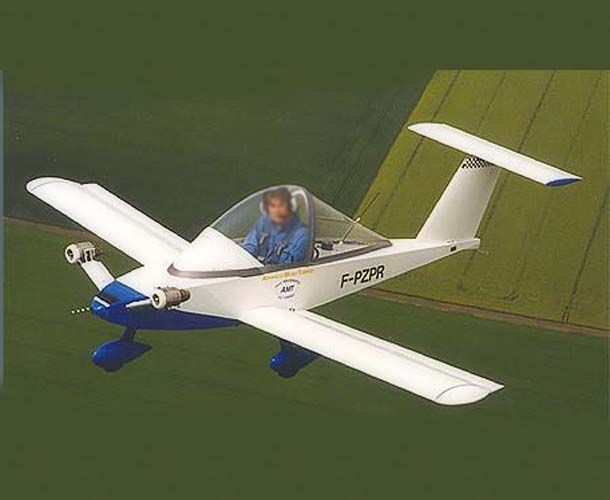
cricri-mc10.jpg

I guess this one is a turbine.
 
My dad used to fly a bonanza back and forth to work. Sold it and bought a Baron then shortly after had an engine quit on his way home, at night. He made that run for years in the bonanza. If he was in the bonanza he more than likely would have been screwed. Instead, he made an uneventful landing on a paved runway. And don't give me the "but you're twice as likely to have an engine failure in a twin" nonsense.

Wouldn't call it nonsense - if he still had the Bonanza, the engine failure would be half as likely. So equally likely it never would have happened. But yes, at altitude in cruise, of course we would all rather have a twin. But the cases where people are killed in singles or twins are almost never are in cruise with an engine failure. The forced landing isn't what you ever want, but it is in most cases survivable. And also incredibly rare.

The case when I don't want a light piston twin is heavy, just after V1, losing the engine, and deciding if I will wreck the plane straight ahead and probably live, or try to fly it. Which happens to be when a huge number of fatalities occur. And I have never heard many stories from people that have successfully flown it, as you usually read about them in NTSB reports. And I don't think most multi pilots do a very good job computing detailed enough performance numbers in light aircraft to make that decision - it would take me an hour for every departure - and I wouldn't actually do a thorough enough job, either.

I'll give you the fact that sometimes in a piston twin you won't be able to climb with an engine failure on takeoff. Then you're a single looking for a place to land. But the other 99% of the flight you are much better off in a twin if an engine quits. How you could argue that just baffles me.

It is a lot more than 1% of the time. At MGTOW, most of the time that light twin, in warm weather, will be a very uncontrollable single looking for a place to land. It would be a much safer glider looking for a place to land.

Sure, 90% of the flight at altitude, a second engine is fantastic to have. But very few accidents actually happen in cruise.

Put it this way - if you had a choice of two cars, one that was 1% less likely to kill you due to a faulty airbag, but was 4 times more likely to kill you because of the gas tank exploding, which would you say is better?

For the record, I have no problem with multiengine aircraft. If I could afford to operate one, I would probably buy one. I'm not even multi rated. But the FAA makes me read all about the accidents they have to renew my CFI nonetheless. With sim time every six months, and computing detailed takeoff data, I absolutely do think they can be operated safely. But they aren't 737s and they aren't magically safer. They just have risks in different phases of flight. For twins, much more so from loss of control, which happens way too often in singles too.
 
Yeah, but pulling the gear out of the wind, you pick up almost 20kts if memory serves. Put a turbo on it, and you gain almost 50!
According to an old Cessna engineer their wind tunnel testing showed that the nose gear accounted for like 70% of the drag of the landing gear. On the 182 he proposed leaving the mains down and having the nose retract but for some reason marketing didn't buy off on it.
 
  • Like
Reactions: bp
Back
Top