

You are using an out of date browser. It may not display this or other websites correctly.
You should upgrade or use an alternative browser.
You should upgrade or use an alternative browser.
Severe clear ice. Thank you Kansas city
- Thread starter avi8tor1983
- Start date
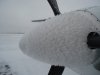

Yup, icing in the Van sucks, took this much into AGC one afternoon. It can fly in ice, it just doesn't like to for very long, and you've gotta leave yourself options. .
Very much so. Its the reason the things (ours, at least) had boots on the wing/horiz and vert stabs, landing gear struts, and front of the baggage pod.
Worst ice I'd been in was in that plane, and it only wanted to go down......

CameronF
Well-Known Member
Very much so. Its the reason the things (ours, at least) had boots on the wing/horiz and vert stabs, landing gear struts, and front of the baggage pod.
Worst ice I'd been in was in that plane, and it only wanted to go down......
Do you think the vans will eventually be phased out by something that can handle ice better or does it not make sense financially for operators?
Do you think the vans will eventually be phased out by something that can handle ice better or does it not make sense financially for operators?
It's a great airplane for what it does, just avoid ice. So I don't think they'll be phased out, since their pros far outweigh their cons.
CameronF
Well-Known Member
It's a great airplane for what it does, just avoid ice. So I don't think they'll be phased out, since their pros far outweigh their cons.
Ya...it just seems everytime I hear of an icing incident with cargo, there's usually a Caravan behind the story.
Ya...it just seems everytime I hear of an icing incident with cargo, there's usually a Caravan behind the story.
Thats just because there are just so many of them flying cargo. And unlike a Chieftain, they're just not as able to handle moderate to worse icing.

SpiraMirabilis
Possible Subversive
You can't legally dispatch a caravan into known icing of moderate anyway.
You can't legally dispatch a caravan into known icing of moderate anyway.
Mine went moderate to severe pretty quick.....inadverent encounter.

dasleben
That's just, like, your opinion, man
You can't legally dispatch a caravan into known icing of moderate anyway.
That sucks!
dasleben
That's just, like, your opinion, man
Or mixed conditions.
That can be pretty sketchy in any aircraft, but unless FZRA is present we can still go. I'd delay for ice pellets on the surface, too.
No moderate ice though? What if there's an AIRMET Z out (basically all winter)?
SpiraMirabilis
Possible Subversive
That can be pretty sketchy in any aircraft, but unless FZRA is present we can still go. I'd delay for ice pellets on the surface, too.
No moderate ice though? What if there's an AIRMET Z out (basically all winter)?
Airmets are not known moderate ice, an airmet for ice could be for known moderate icing conditions. There is a subtle distinction here.
The distinction being that you can dispatch a caravan into known icing conditions of moderate, but you can not dispatch a caravan into known icing of moderate. You look at PIREPs, essentially.
The most annoying thing for us is that if we have 600hp airplane if there is forecasted icing (that would be icing conditions or actual icing) then we lose 750lbs and have to take off with a MTOW of 8,000lbs compared to normal 8,750. If you have the 675hp engine then you can go at 8,500... thats why you usually see up north all 675s.
dasleben
That's just, like, your opinion, man
Airmets are not known moderate ice, an airmet for ice could be for known moderate icing conditions. There is a subtle distinction here.
The distinction being that you can dispatch a caravan into known icing conditions of moderate, but you can not dispatch a caravan into known icing of moderate. You look at PIREPs, essentially.
I'm not sure I'm quite following the distinction. Here's the latest AIRMET Z for the northeast:
WAUS41 KKCI 300845
BOSZ WA 300845
AIRMET ZULU UPDT 1 FOR ICE AND FRZLVL VALID UNTIL 301500
AIRMET ICE...ME NH VT MA RI CT NY NJ PA MD DE VA AND CSTL WTRS
FROM HUL TO 60SW YSJ TO 200SE ACK TO 100E ORF TO 30SSW HAR TO HNK
TO MPV TO HUL
MOD ICE BTN FRZLVL AND FL200. FRZLVL 040-100. CONDS CONTG BYD 15Z
THRU 21Z.
Seems to me that's known moderate icing. At least that's how I've always approached it.
The most annoying thing for us is that if we have 600hp airplane if there is forecasted icing (that would be icing conditions or actual icing) then we lose 750lbs and have to take off with a MTOW of 8,000lbs compared to normal 8,750. If you have the 675hp engine then you can go at 8,500... thats why you usually see up north all 675s.
8,750 lbs and 600hp? No wonder the thing sucks in the ice.


Fly_Unity
Well-Known Member
I'm not sure I'm quite following the distinction. Here's the latest AIRMET Z for the northeast:
WAUS41 KKCI 300845
BOSZ WA 300845
AIRMET ZULU UPDT 1 FOR ICE AND FRZLVL VALID UNTIL 301500
AIRMET ICE...ME NH VT MA RI CT NY NJ PA MD DE VA AND CSTL WTRS
FROM HUL TO 60SW YSJ TO 200SE ACK TO 100E ORF TO 30SSW HAR TO HNK
TO MPV TO HUL
MOD ICE BTN FRZLVL AND FL200. FRZLVL 040-100. CONDS CONTG BYD 15Z
THRU 21Z.
Seems to me that's known moderate icing. At least that's how I've always approached it.
8,750 lbs and 600hp? No wonder the thing sucks in the ice.
The Airmets for moderate icing is essentially a joke... There are many days that you can fly through an Airmet Z and not even enter IMC, They are just giving the warning that "possible ice" is in the area. Its not "known ice," its more like icing "conditions."
Now if you had a PIREP that reported moderate ice, thats when you KNOW there is moderate icing in the area. Big difference.
There have been months up here in MT that an moderate icing Airmet will stay over the area all month yet I wont get much more then light if I do get ice because its so dry.
CameronF
Well-Known Member
The Airmets for moderate icing is essentially a joke... There are many days that you can fly through an Airmet Z and not even enter IMC, They are just giving the warning that "possible ice" is in the area. Its not "known ice," its more like icing "conditions."
Now if you had a PIREP that reported moderate ice, thats when you KNOW there is moderate icing in the area. Big difference.
There have been months up here in MT that an moderate icing Airmet will stay over the area all month yet I wont get much more then light if I do get ice because its so dry.
Nice, I never understood that distinction until now. Thanks!
dasleben
That's just, like, your opinion, man
The Airmets for moderate icing is essentially a joke... There are many days that you can fly through an Airmet Z and not even enter IMC, They are just giving the warning that "possible ice" is in the area. Its not "known ice," its more like icing "conditions."
Now if you had a PIREP that reported moderate ice, thats when you KNOW there is moderate icing in the area. Big difference.
There have been months up here in MT that an moderate icing Airmet will stay over the area all month yet I wont get much more then light if I do get ice because its so dry.
That's all very true, but I suppose my company approaches it differently. In order for us to use a non-FIKI aircraft in an AIRMET Z, for example (some of our 402s don't have boots), we'd have to have PIREPs showing nothing more than trace ice.
I just hate the runaround with known vs. non-known ice. I had the prop heat MEL'd a couple weeks ago and was sitting there trying to rack my brain to figure out if it was known ice or not. There was an AIRMET Z out, and the company sided with me when I delayed. Once another pilot did the route and reported no icing, I launched legally.
You can't legally dispatch a caravan into known icing of moderate anyway.
Not trying to sound like an ass again, but where did you hear that?
The C208 icing supplement says the caravan may not be flown into freezing rain (FZRA), freezing drizzle (FZDZ), mixed conditions, or conditions defined as severe icing but nothing about moderate ice being a limitation for dispatch. Another common confusion with the van is there is no limitation that says the Caravan cannot depart from an airport that is reporting freezing fog, as long as this pre-takeoff contamination is complied with.
The B model caravan may not be flown into known icing conditions above 8,500 lbs. (aircraft equipped with a cargo pod), or 8,750 lbs. (aircraft without a cargo pod).
Common confusion: If the pilot will encounter icing conditions on the leg segment but not until 2 hours after takeoff does the aircraft have to depart at these reduced weights?...The pilot may depart at maximum takeoff weight as long as they insure that the aircraft will burn enough fuel to be at or below the appropriate icing weight prior to entering the known icing conditions
8,750 lbs and 600hp? No wonder the thing sucks in the ice.
The Texas Turbine conversion would do good things for the Van in ice.
SpiraMirabilis
Possible Subversive
not trying to sound like an ass again, but where did you hear that?
The c208 icing supplement says the caravan may not be flown into freezing rain (fzra), freezing drizzle (fzdz), mixed conditions, or conditions defined as severe icing but nothing about moderate ice being a limitation for dispatch. Another common confusion with the van is there is no limitation that says the caravan cannot depart from an airport that is reporting freezing fog, as long as this pre-takeoff contamination is complied with.
The b model caravan may not be flown into known icing conditions above 8,500 lbs. (aircraft equipped with a cargo pod), or 8,750 lbs. (aircraft without a cargo pod).
Common confusion: If the pilot will encounter icing conditions on the leg segment but not until 2 hours after takeoff does the aircraft have to depart at these reduced weights?...the pilot may depart at maximum takeoff weight as long as they insure that the aircraft will burn enough fuel to be at or below the appropriate icing weight prior to entering the known icing conditions
the texas turbine conversion would do good things for the van in ice.
ad 2007-10-15 ... not to sound like an ass myself but that that 2007 on it is the year, like from year 2007. As in old news.

Incidentally this AD is why caravans have that annoying "Min Icing Airspeed" light and horn which scares the crap out of you if you forget to turn the prop heat off while landing and you go below 120kts. (It sounds like what a stall horn might sound like.)
Also incidentally the 120kts arbitrary number is what the FAA defines moderate icing in cruise flight as.
So, if you're in a caravan and you have ice and it is slowed you down to 120kts in cruise you know it is moderate... or if you can't hold altitude at 120kts like the OP then you know it is severe, at least as defined by the FAA.
I looked it up, here is the text:
(1) For Cessna Model 208 airplanes and Model 208B airplanes, all serial numbers, equipped with airframe deicing pneumatic boots, that are not currently prohibited from flight in known or forecast icing: You are prohibited from continued flight after encountering moderate or greater icing conditions. The airplane can dispatch into forecast areas of icing but must exit moderate or greater icing conditions if encountered.
Slightly different than what I said... but I take that to say that if you have KNOWN icing of moderate that you don't believe will be possible to exit from then you shouldn't dispatch because you'll just be in violation of continuing the flight after you encounter it. It hinges on if you can exit moderate. Somewhere like Oklahoma when freezing level is low and clouds just never stop if there was known moderate icing at or near my altitude(s) I probably wouldn't go. You wouldn't be able to climb up and couldn't descend below it.
ad 2007-10-15 ... not to sound like an ass myself but that that 2007 on it is the year, like from year 2007. As in old news.
Incidentally this AD is why caravans have that annoying "Min Icing Airspeed" light and horn which scares the crap out of you if you forget to turn the prop heat off while landing and you go below 120kts. (It sounds like what a stall horn might sound like.)
Also incidentally the 120kts arbitrary number is what the FAA defines moderate icing in cruise flight as.
.
Is there a newer one that I am not aware of?
The low airspeed warning goes off at 110.
So in the end the 208 can still be dispatached into know or forcast moderate ice.