
You are using an out of date browser. It may not display this or other websites correctly.
You should upgrade or use an alternative browser.
You should upgrade or use an alternative browser.
Flap retraction on the runway
- Thread starter bksslc
- Start date


ralphbrynard
New Member
I was never instructed to raise flaps before braking but do it pretty regularly because it seemed to make sense (raise flaps= less lift= more weight on the wheels.) However, I have heard that the repetition of raising the flaps (whether for landing or touch and go's) can translate over to retractable gear aircraft. Essentially, you are patterned to simply "do" somthing with your hand upon landing, and occassionally this results in a gear retraction once on the ground.

greaper007
Well-Known Member
Just to add to the mix. Every company checklist I've ever seen, from flight schools to 121. Said not to retract flaps until clear of the runway. There's really never any need to start monkeying with switches and levers that you're not looking at while flying. Which is why things like thrust reversers or pitch trim are right where your hands already are during critical phases of flight. The rest is for the non-flying pilot, or in the case of single pilot, when you come to a stop.
It would really suck to have the nose gear come up because you were tired, hungry, dehydrated and mentally beat from that poopy flight and thought the nose gear handle was the flap handle. Ninja hands don't do anything but get you into trouble. Maybe not today, but someday they will.
It would really suck to have the nose gear come up because you were tired, hungry, dehydrated and mentally beat from that poopy flight and thought the nose gear handle was the flap handle. Ninja hands don't do anything but get you into trouble. Maybe not today, but someday they will.

BajtheJino
I'm looking at you.
I'm a nancy because I want to do things that won't bend metal?
Check it out, boss, if you can't put a 172 down on a 1,800 turf runway without putting the flaps out as soon as you're on the ground, you need some remedial training.
Is this from the days when you flew freight? Where you flying essential services or something? Oh...wait. Thats right...

CoffeeIcePapers
Well-Hung Member
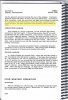
If it is in the POH then scan it and post on here.
This is from the 172M POH, under the Short Field Landing procedure. Although I question the effectiveness of the technique, it is recommended by Cessna.
Attachments

Okie_Pilot
Pitts Builder
Why does it seem to me that everybody here that flies complex aircraft (read retractable gear) needs to replace their squat switches? When the weight of the acft is on the gear and your squat switch is functional, I HIGHLY doubt your landing gear system will be able to lift the gear and stow it when its under the weight of the acft.
It also helps to know which handle is which. Do you usually get yourself into a bind doing touch and goes in a retractable because you don't pay attention to which handle is the flaps and which is the gear?
It also helps to know which handle is which. Do you usually get yourself into a bind doing touch and goes in a retractable because you don't pay attention to which handle is the flaps and which is the gear?

Unnecessary risk taken with zero benefit.
Even if the Feds wouldn't kick me in the junk if I retracted flaps on the runway, I really don't see a benefit to making a configuration change when I should be making sure the skipper isn't going to blow across an active runway in LAX.
You can have the safety on the gun engaged, but are you still going to point it at your dog Scruffy's head and squeeze the trigger? Probably not!
Even if the Feds wouldn't kick me in the junk if I retracted flaps on the runway, I really don't see a benefit to making a configuration change when I should be making sure the skipper isn't going to blow across an active runway in LAX.
You can have the safety on the gun engaged, but are you still going to point it at your dog Scruffy's head and squeeze the trigger? Probably not!

tgrayson
New Member
It also helps to know which handle is which.
Not as much as you might think. This sort of error is best understood as activating the wrong subroutine in your brain. The "raise the gear" subroutine is pretty similar to the "raise the flap" subroutine. Within the context of each subroutine, the lever feels correct. Since these subroutines are easily confused, it's best not to activate either until you can devote 100% of your attention to selecting the correct one.

ferguson354
Well-Known Member
Why does it seem to me that everybody here that flies complex aircraft (read retractable gear) needs to replace their squat switches? When the weight of the acft is on the gear and your squat switch is functional, I HIGHLY doubt your landing gear system will be able to lift the gear and stow it when its under the weight of the acft.
It also helps to know which handle is which. Do you usually get yourself into a bind doing touch and goes in a retractable because you don't pay attention to which handle is the flaps and which is the gear?
A squat switch is just like any other system - it can fail. And yes failure means it can allow retraction on the ground. Also it can be common for a strut to get a little "sticky" (for lack of a better term??) and stay extended for a while on roll out or even while taxiing - in which case the circuit could remain in contact and allow retraction. As for paying attention to flap/gear handle selection - the idea is that you don't take your attention away from maintaining positive control of the aircraft. If you really want to do touch and goes take a safety pilot who can work the flaps for you.
Okie_Pilot
Pitts Builder
Since these subroutines are easily confused, it's best not to activate either until you can devote 100% of your attention to selecting the correct one.
Hence, know which handle is which. Look over at it and read what is says and know that it is the flaps and not the landing gear. I don't know, maybe I'm just blessed with being able to remain on centerline for the one second it takes to look over and know it's the right handle.
A squat switch is just like any other system - it can fail. And yes failure means it can allow retraction on the ground. Also it can be common for a strut to get a little "sticky" (for lack of a better term??) and stay extended for a while on roll out or even while taxiing - in which case the circuit could remain in contact and allow retraction. As for paying attention to flap/gear handle selection - the idea is that you don't take your attention away from maintaining positive control of the aircraft. If you really want to do touch and goes take a safety pilot who can work the flaps for you.
The sticky strut scenario is an interesting one, I didn't think about that. Thanks for bringing that up.
I'm not saying retracting the flaps right after touchdown is the correct or incorrect way. I know after flying in Western OK with 30-40kt winds in a 172, and the way I was taught to fly it, that retracting the flaps right after touchdown will prevent it even further from becoming airborne once again. Also, depending on the degree of the crosswind, retracting the flaps will cause less buildup under one side of the wing due to gusts or high winds and causing that wing to lift up.

ppragman
No pasa nada.
Unnecessary risk taken with zero benefit.
Even if the Feds wouldn't kick me in the junk if I retracted flaps on the runway, I really don't see a benefit to making a configuration change when I should be making sure the skipper isn't going to blow across an active runway in LAX.
You can have the safety on the gun engaged, but are you still going to point it at your dog Scruffy's head and squeeze the trigger? Probably now!
Maybe in big airplanes, yeah, but in little airplanes, sometimes that lift needs to go away, and right now. If you're flying slow enough at touchdown the effect of the retraction is instantly noticeable, if you're not, it won't be. In a strong steady wind that's straight down the runway, you're better off to leave them down.
I think the feds get mad at configuration changes on the runway not because you're using the configuration change to maintain control of the airplane, but rather because you're running a checklist during the roll out when you should be concentrating on controlling the airplane. Those are two very different changes. The flaps are a control surface, you wouldn't quit holding ailerons into the wind because the nose wheel was down or because you thought it'd distract you too much? In principle, the theory is the same. It's not about trying to be fast and cut corners so that you're after landing check is done sooner (at least not for me anyway) its to reduce the lift being produced, and to better control the aircraft.
Not as much as you might think. This sort of error is best understood as activating the wrong subroutine in your brain. The "raise the gear" subroutine is pretty similar to the "raise the flap" subroutine. Within the context of each subroutine, the lever feels correct. Since these subroutines are easily confused, it's best not to activate either until you can devote 100% of your attention to selecting the correct one.
I disagree with this sentiment to an extent. If you're "raise the gear" subroutine consists of an absent minded look outside to see if you're climbing away, then a hurried flip of the handle, then yes, I can see this being a problem. But that's not what raising the gear is about. There are conditions that have to be met for either to be retracted and they're both very different. In my opinion the two are totally different things.
Raising the gear:
Positive rate of climb
Out of useable runway
Gear coming up
Raising the flaps in flight:
Obstacles are clear
Flaps are no longer desired
Flaps retracting
Raising the flaps on the rollout:
Directional control is maintained
Flaps are no longer desired
Flaps retracting
The touching of anything in the cockpit that's not a yoke or pedals should be a conscious decision. Reaching around and mindlessly flipping switches, or flying solely on the basis of muscle memory is poor form. Muscle memory is part of it, and it certainly makes your flows easier to perform, but there has to be a conscious decision to perform a certain flow a decision which is made based on the analysis of external conditions. Flipping the flap lever up on touchdown out of habit isn't what I or most of the guys I know do, they think to themselves, "I'm on the ground, I've got the airplane under control, do I need this extra lift?" No. "Ok, flaps retracting."
But maybe I'm missing something. I think it's akin to the amphib pilot thinking, "Ok, I'm landing on water now, the gear should be up!"
ferguson354
Well-Known Member
I'm not saying retracting the flaps right after touchdown is the correct or incorrect way:clap:. I know after flying in Western OK with 30-40kt winds in a 172, and the way I was taught to fly it, that retracting the flaps right after touchdown will prevent it even further from becoming airborne once again. Also, depending on the degree of the crosswind, retracting the flaps will cause less buildup under one side of the wing due to gusts or high winds and causing that wing to lift up.
I'm with you 100% on this! If you're flying a 172 in crazy wind - do what you need to do. If you're flying a twin in crazy wind....it's probably heavy enough to stay on the ground. My point here is - fly the airplane you fly for the situation you are in. It kinda looks like we have two different thoughts going on here between the 121/135 guys and the simple (read:not complex) GA aircraft. The Bonanza I fly can generally land in just about anything...and I don't bother to touch anything on roll out. The C172 I fly on the other hand...if it's really windy, you can bet I'll pull the flaps up.

Bandit_Driver
Gold Member
A squat switch is just like any other system - it can fail. And yes failure means it can allow retraction on the ground. Also it can be common for a strut to get a little "sticky" (for lack of a better term??) and stay extended for a while on roll out or even while taxiing - in which case the circuit could remain in contact and allow retraction. As for paying attention to flap/gear handle selection - the idea is that you don't take your attention away from maintaining positive control of the aircraft. If you really want to do touch and goes take a safety pilot who can work the flaps for you.
Squat switches can and do fail frequently and I'd never trust them to prevent you from do anything. There was an accident over a decade ago in which a Seneca IV geared up on takeoff. Apparently the pilots were trying to do an "airshow" takeoff similar to the angles in which the solo retracts the gear as soon as it breaks ground. They selected gear up prior to the takeoff roll. Unfortunately they hit a bump in the runway well prior to flying speed and the gear retracted... The switch didn't technically fail but didn't provide the protection the pilots thought they had.
Squat switches can and do fail frequently and I'd never trust them to prevent you from do anything. There was an accident over a decade ago in which a Seneca IV geared up on takeoff. Apparently the pilots were trying to do an "airshow" takeoff similar to the angles in which the solo retracts the gear as soon as it breaks ground. They selected gear up prior to the takeoff roll. Unfortunately they hit a bump in the runway well prior to flying speed and the gear retracted... The switch didn't technically fail but didn't provide the protection the pilots thought they had.
Ruuuhh Roooohhhhh!!!!!!
Bandit_Driver
Gold Member
Ruuuhh Roooohhhhh!!!!!!
Yup, we heard the tower tape of them calling for help afterward with the gear horn blaring in the background...

jtrain609
Antisocial Monster
Unnecessary risk taken with zero benefit.
Even if the Feds wouldn't kick me in the junk if I retracted flaps on the runway, I really don't see a benefit to making a configuration change when I should be making sure the skipper isn't going to blow across an active runway in LAX.
You can have the safety on the gun engaged, but are you still going to point it at your dog Scruffy's head and squeeze the trigger? Probably now!
Ladies and gentlemen, we have a winner!
jtrain609
Antisocial Monster
Hence, know which handle is which. Look over at it and read what is says and know that it is the flaps and not the landing gear. I don't know, maybe I'm just blessed with being able to remain on centerline for the one second it takes to look over and know it's the right handle.
The sticky strut scenario is an interesting one, I didn't think about that. Thanks for bringing that up.
I'm not saying retracting the flaps right after touchdown is the correct or incorrect way. I know after flying in Western OK with 30-40kt winds in a 172, and the way I was taught to fly it, that retracting the flaps right after touchdown will prevent it even further from becoming airborne once again. Also, depending on the degree of the crosswind, retracting the flaps will cause less buildup under one side of the wing due to gusts or high winds and causing that wing to lift up.
Why not just cut out the middleman and land with no flaps, or a reduced flap setting?

dasleben
That's just, like, your opinion, man
Why not just cut out the middleman and land with no flaps, or a reduced flap setting?
That doesn't necessarily work for short strips. In my particular aircraft, a no-flap approach adds 13 knots to Vref (108 knot minimum) with a corresponding 35% increase in landing distance.
As said before, there's a time and a place for retracting flaps on the runway. I operate on paved runways all day long and don't have any business telling these Alaska guys how they should operate into short dirt strips. If you haven't done any of that stuff, there's a good bet you don't either. No offense meant by that statement, but that world is foreign to many of us.