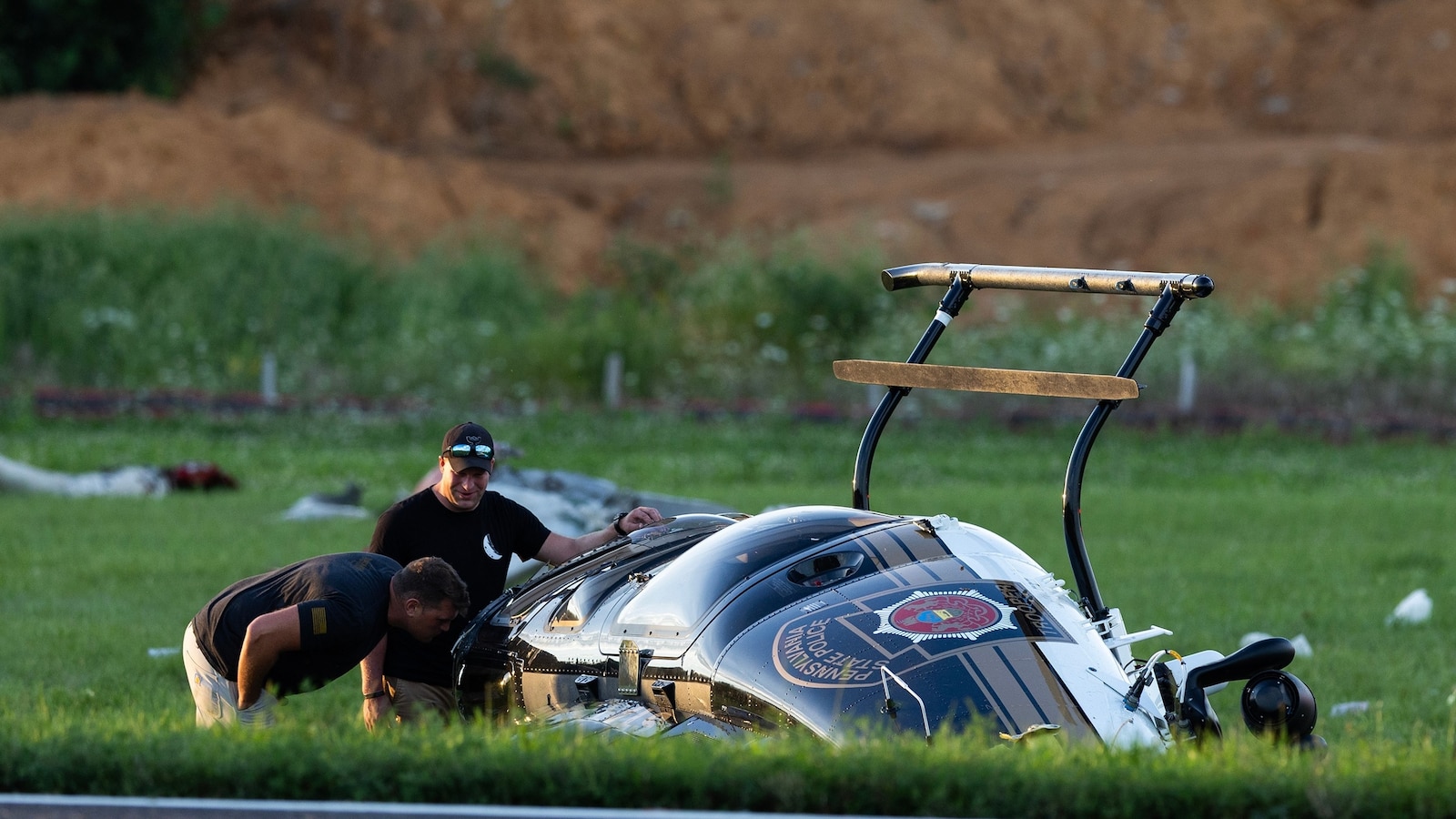
Without commenting on this particular incident, over the years, I've learned that military and public operated aircraft (police, fire, rescue, etc) are on their own program. In theory we all operate within the same sphere, but understand that it's more like a Venn diagram, in which our common frames of reference represent only a slice of overlap.
in theory, so-called public use aircraft, which aren’t under FAA oversight, don’t have to follow any FARs. This is all government aircraft: Mil, NASA, NOAA, FAA, mil, other fed/state/county LE/Fire, etc. And in theory, their crews don’t even have to have a license or medical, and things like no military aircraft has an airworthiness cert. But in practice, they do follow general Part 91, if only to fit in with the rest of air traffic in the airspace system. However, there can be exceptions that they have from 91. A common one is the ability to exceed 250 below 10k, and exceptions to things like external aircraft lighting when in certain airspace or when undertaking certain operations. The military in particular, has their own operating regulations, but if you look at them closely, the basics of those regs generally mirror Part 91 for all routine ops in the national airspace system.
As an example, back in the 90s, there was a rash of incidents along the Atlantic coast. Somehow, it had entered unofficial practice (at least to the local units) to use civilian traffic as intercept practice. Hey, they kept their distance, what could possibly be the problem? We can certainly argue the merits of doing so without the consent of all involved, but the gap in knowledge between the two proved to be...troublesome. You see, the military jets were operating with their mode C equipment. What do you get with that mixed with a high rate of closure? You guessed it, a very panicky RA from TCAS that appeared out of no where. Because of the closure rate, the TCAS skipped the "traffic traffic" and went right to the RA, causing considerable angst. Made the press, practice got deleted, and nothing left but some clenched rear ends. The point is that there was a substantial disconnect between the two types of operations.
Operating in or around MOAs & restricted areas, operating from joint use or near military bases, or flying under military ATC you need to understand the above, and if not using a lot of caution, certainly have a heightened level of awareness that their frame of reference may be different from yours.
To be clear, I'm not casting asparagus at anyone, but understand there is friction at the interface.
The whole practice intercept deal was done at a time when TCAS didn’t exist, rightly or wrongly. As TCAS came online, the problems within now manifested themselves.
Related, and to you point of Special Use Airspace, many years ago, i was working inside a MOA, putting a bird through its paces as i was finishing up an operational check of some systems. As i was accelerating for the beginning of a loop into a cloverleaf maneuver, at 500 knots i began pull to the loop entry, rocketing up in altitude towards the loop apex. Unknown to me, some airliner was crossing high above in cruise at 390 or 400 or something, far outside the top altitude of the MOA airspace, which was capped at 300. The loop apex was going to be around 260 or so before coming back down, but apparently their TCAS saw my Mode C as it instantly transitioned to a 10,000+ fpm climb rate out ahead of them, and duly issued them an RA to them. Of course, the TCAS has no idea that i’m in separate airspace from them, or that i’m capped below a certain altitude far from them, it only seas what it sees, and duly responds. Am not sure if the crew honored the TCAS, what it told them, or really what they could even do maneuver-wise to avoid me had i truly been an actual real conflict; but those are things that can occur, even with everyone doing their own thing properly.


 abcnews.com


