
You are using an out of date browser. It may not display this or other websites correctly.
You should upgrade or use an alternative browser.
You should upgrade or use an alternative browser.
pitch=airspeed; power=altitude
- Thread starter js0305
- Start date

I disagree...to many times I see pilots pitch for airspeed instead of altitude on stalls.
If they followed pitch for AS/power for alt properly, in the first place, they wouldn't be in a stall.
Hacker: I would love to try that out sometime. I have no doubt that you are right, but it would be really sweet to fly that sim! That is why I clarified with, "in any light piston" though.


poser765
Well-Known Member
The really fun thing about this debate is that if the pilot properly uses pith for altitude and power for airspeed they wouldn't be in a stall either. In the airplane this is a semantics debate where in reality you are doing the same thing on final regardless of what camp you are in.If they followed pitch for AS/power for alt properly, in the first place, they wouldn't be in a stall.
The really fun thing about this debate is that if the pilot properly uses pith for altitude and power for airspeed they wouldn't be in a stall either.
Key word = bolded. There is no "properly" for the right technique, it simply works every time. It even works in stalls if you add the power when you push forward, I just didn't feel like adding that to the debate.
They key is pushing for a pitch that you know will yield a safe airspeed, level flight attitude will never fail you here. Then when speeds up pitch for a climb speed. You don't just keep arbitrarily pitching until the airspeed picks up just like you don't arbitrarily keep turning until the glideslope needle is centered.
What tgray said is 100 percent correct. What it falls back on, for me, with a private pilot, is what will kill you.
No pilot, I repeat, no pilot, will ever die (in any light piston) if you teach them pitch for airspeed and power for altitude. That is physics/math and it works every single time, without fail.
A pilot taught to pitch for altitude can easily find themselves in a stall spin accident when the engine fails. Without that engine they can pitch till they bend the yoke, and according to the book stick and rudder, some have, and they won't gain any altitude after their momentum burns off.
The goal with a private pilot is primacy and instinct, in other words safe habit patterns.
Unfortunately these big boy pilots with 50 million hours and an aircraft that operates primarily on the premise of momentum drill into newbie pilots that pitch can control altitude. It cannot. Even the big boys change airspeed when they pitch. However, momentum from said pitch gives altitude, and in a small aircraft that runs out very quickly since momentum rests on an objects mass and velocity. Both of which are much greater in a 737 than a 172, something these brainiacs fail to consider, IMO.
So again, pitch for AS/power for alt, in any small piston, will never kill a pilot. Period.
If the physics work every time, then next flight you have roll out on the runway and push the yoke full forward and see how much airspeed you get. Also, what are you going to teach on an ILS when the student gets fast? Pitch up and lose the GS or pull some power out to get the speed where it needs to be? I always taught that you use power for airspeed and pitch for altitude until power became fixed (ie full power or no power) then you pitch for airspeed. Theres no set in stone law that works every time for different variables. It all comes down to what variable is fixed for the scenario, if you want to climb at 5 degrees pitch up then power will control the rate at which you climb. If you want to descend at 500 fpm and need to slow down for a speed restriction, you dont increase the pitch because then you mess up your descent profile, you pull the power back and change the pitch to maintain 500 fpm. They all work together.

subpilot
Squawking 7600

tgrayson
New Member
then next flight you have roll out on the runway and push the yoke full forward and see how much airspeed you get.
This objection is absurd. Until the aircraft lifts off the ground and weight is supported by lift, it isn't an airplane and the laws of aircraft flight don't apply.
R
Roger, Roger
Guest
Elevator controls angle of attack and the throttle controls power output of the engine. Exactly how AOA and power output effect the airspeed and altitude of YOUR airplane depends a lot on things like the powerplant type and the wing design.
In the little airplanes that I have flown, it is typically easier for me to control airspeed on final approach, in climb, and definitely in slow flight, by using the elevator. In those situations, throttle tends to be more effective at controlling rate of climb/descent. At cruise airspeeds, it's usually easier to use the elevator to hold altitude and leave the throttle alone, accepting whatever small airspeed excursions occur. If speed control is critical at a certain higher speed (for example, in steep turns) I typically use throttle as the primary means of controlling it. In reality, throttle and elevator work together, but these techniques have worked pretty well for me in small, piston-powered training aircraft. Understand that different airplanes respond slightly differently. Again, elevator controls AOA (not airspeed OR altitude) and throttle controls power output (not airspeed OR altitude).
In the little airplanes that I have flown, it is typically easier for me to control airspeed on final approach, in climb, and definitely in slow flight, by using the elevator. In those situations, throttle tends to be more effective at controlling rate of climb/descent. At cruise airspeeds, it's usually easier to use the elevator to hold altitude and leave the throttle alone, accepting whatever small airspeed excursions occur. If speed control is critical at a certain higher speed (for example, in steep turns) I typically use throttle as the primary means of controlling it. In reality, throttle and elevator work together, but these techniques have worked pretty well for me in small, piston-powered training aircraft. Understand that different airplanes respond slightly differently. Again, elevator controls AOA (not airspeed OR altitude) and throttle controls power output (not airspeed OR altitude).

skidz
Well-Known Member
This is the first time I see this subject on JC, but I see its relevance in a fact that it may be really confusing to a student. I was always told pitch=airspeed, power=altitude as well, until I've met my last instructor, then everything got reversed. Obviously, the answer depends on what kind of power/pitch we're talking about here. For us folks flying little cessna kites pitch=airspeed, power=altitude makes sense. I don't care what people with 50k+ lbs of power think 

That thread, among MANY others on this subject.
To the OP: continue searching, you'll hit a goldmine on this subject here.
Again, elevator controls AOA (not airspeed OR altitude)
What does AOA control?
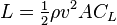
- L is lift force,
- ρ is air density
- v is true airspeed,
- A is planform area, and
- CL is the lift coefficient at the desired angle of attack, Mach number, and Reynolds number[43]
The lift coefficient is dependent on the AOA. If the AOA goes up then CL goes up and something else in the lift equation must change to keep lift and weight balanced. By the other variables in the formula: air density, true airspeed, and planform area, only one can logically change. So we conclude that a change in AOA must be accompanied by a change in in airspeed to keep our happy L=W balance.
Seems you agree with us eggheads without realizing it.

Roger said:and throttle controls power output (not airspeed OR altitude).
I will steal our next image from tgrays website:

What this depicts is Vy being the point at maximum excess in power. We climb or descend because of an excess or lack of power available over power required. Let's assume a glider in a perfectly stable (IE no lifting/sinking/moving air) air mass. Released at 2,000 feet, at MCA (for the wise guys that will comment on this), ever reach 2,001 feet? No.
Point is, power will always yield altitude. You must pitch forward when you increase power, lowering AOA, which we discovered earlier increases airspeed, to get a speed increase from applying power. However, the power didn't increase the speed. The power tried to make you climb. Your pitch change increased the speed.
ajf005 said:Theres no set in stone law that works every time for different variables.
But there are instincts that won't kill you and instincts that can kill you. Our job when teaching a private pilot is to ensure that their instincts are based on basic physical law because any other premise can be deadly.
ajf005 said:what are you going to teach on an ILS when the student gets fast?
shdw said:The goal with a private pilot is primacy and instinct, in other words safe habit patterns.
To all: Those of you saying "beating a dead horse." Consider this: we have 100's of members a day that read these forums and do not post. If one of those readers has an engine failure in the future and remembers reading this thread, it could save their life. That alone makes this worth it to me.
Important topics, such as this, should be debated repeatedly and often until the majority sees the steady truths versus the shaky, often illogical, opposition on the subject.
Disclaimer: Again, I am only speaking for light piston aircraft and primary students.
To all: Those of you saying "beating a dead horse." Consider this: we have 100's of members a day that read these forums and do not post. If one of those readers has an engine failure in the future and remembers reading this thread, it could save their life. That alone makes this worth it to me.
.
Then post a good link to the great debates that have already occurred......if you feel this way.
Then post a good link to the great debates that have already occurred......if you feel this way.
Why? With each repeated typing I discover something new and solidify what I already know. Furthermore, each new debate brings a few new oppositions to the forefront. Each of these new oppositions teaches me something, so I find the discussion an important one.
Why? With each repeated typing I discover something new and solidify what I already know. Furthermore, each new debate brings a few new oppositions to the forefront. Each of these new oppositions teaches me something, so I find the discussion an important one.
You're completely missing my point.
Post a link for people to read.........kind of like recommending a book. They'll either find the answer, or questions generated from that gaining of knowledge will spur debate on something new or something that needs to be better understood.
Call it more efficient use of the subject matter here.
ESPECIALLY on subjects that are dead hose subjects. May as well open the "spin debate for PPLs" subject too.

CoffeeIcePapers
Well-Hung Member
If the physics work every time, then next flight you have roll out on the runway and push the yoke full forward and see how much airspeed you get.
Absurd, as addressed by tgrayson.
Also, what are you going to teach on an ILS when the student gets fast? Pitch up and lose the GS or pull some power out to get the speed where it needs to be?
I teach my students to use 90 knots indicated on the approach. Pitch for airspeed, power for glideslope. It works quite well. In your scenario, the student is pitched too far nose forward, and possibly has too much power. Most likely, it will require a change in pitch and power at this point.

jhugz
Well-Known Member
Ah...you got me. Give me credit I just worked the night shift.
Absurd, as addressed by tgrayson.
I teach my students to use 90 knots indicated on the approach. Pitch for airspeed, power for glideslope. It works quite well. In your scenario, the student is pitched too far nose forward, and possibly has too much power. Most likely, it will require a change in pitch and power at this point.
I agree but which would you do first? If I'm on the glideslope and riding it down perfectly I'm not going to change my pitch right away without pulling power first. You will have to do both eventually but im going to adjust the power and slowly change the pitch to compensate for the loss of lift from a reduced airspeed. Is this the only way? Not at all but it makes the most sense to me.
What about in cruise if you have to slow down for spacing? Are you going to pitch up first or pull power first? Me, I pull power and compensate with pitch to hold altitude...it seems logical to me to do it that way but theres other ways to slow down too. I guess where I'm getting is do it the way you want but don't get deadset on "theres only one way, its the way my CFI taught me and any other way is wrong" mentality.
Pitch+Power=Performance they work together
subpilot
Squawking 7600
I agree but which would you do first? If I'm on the glideslope and riding it down perfectly I'm not going to change my pitch right away without pulling power first. You will have to do both eventually but im going to adjust the power and slowly change the pitch to compensate for the loss of lift from a reduced airspeed. Is this the only way? Not at all but it makes the most sense to me.
What about in cruise if you have to slow down for spacing? Are you going to pitch up first or pull power first? Me, I pull power and compensate with pitch to hold altitude...it seems logical to me to do it that way but theres other ways to slow down too. I guess where I'm getting is do it the way you want but don't get deadset on "theres only one way, its the way my CFI taught me and any other way is wrong" mentality.
Pitch+Power=Performance they work together
Thank you. :clap:
Do what works for you but please don't tell everyone else that they are wrong and that they are going to kill themselves. All we are doing here is skinning cats.

tlove482
Well-Known Member
To all: Those of you saying "beating a dead horse." Consider this: we have 100's of members a day that read these forums and do not post. If one of those readers has an engine failure in the future and remembers reading this thread, it could save their life. That alone makes this worth it to me.
When power is set, even no power, then pitch controls airspeed. We should be teaching to pitch for Best glide in an engine failure anyway.
tgrayson
New Member
I guess where I'm getting is do it the way you want but don't get deadset on "theres only one way, its the way my CFI taught me and any other way is wrong" mentality.
What you and most other are confusing is a physical explanation vs pilot technique. For the physics, there is indeed only one right answer, but pilot technique allows more than one way to accomplish the goal....sometimes. If you're flying down the ILS and want to slow down, the AoA will have to increase. However, if you merely increase the AoA, you'll get above glideslope, so power must be reduced, too. You can make these changes in any order as long as you do them at close to the same time.
This isn't true for every flight regime. If you get low and slow in final approach in a low powered airplane, the idea that you can power for airspeed and pitch for altitude is a very false one that may well lead to a stall/spin accident.
Just because you most often need to make coordinated changes in AoA and power doesn't mean that you can't define exactly what each control does. This is the job of any instructor, breaking down a skill into its components, explaining how and why each movement is made, then teaching the student how to combine them to produce the desired effect. If you can't do that for a particular subject, then you can't effectively teach that subject. While this happens to all of us on occasion, it's a different thing entirely to make a virtue of it, which is what seems to happen on this particular subject, where "everything controls everything" is taken as a mistaken mark of sophistication.