
When are you in the hold?

Shiftace

s***posting with decency. trolling with integrity.
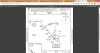
Here is the approach plate. VOR for Rwy 13 at KPKD.

Missed approach is at VOR, when station passage occurs. As chart says fly out, climb to 3200 and then LH turn to VOR.

When are you "in the hold"? I say you are in the hold, when you pass station again (after climb out and return), and start racetrack.

What say you?

upload_2015-10-17_21-46-14.png


Link to full plate:http://155.178.201.160/d-tpp/1511/05298VD13.PDF
 

Attachments

  • upload_2015-10-17_21-45-31.png
    upload_2015-10-17_21-45-31.png
    145.2 KB · Views: 157
When are you "in the hold"? I say you are in the hold, when you pass station again (after climb out and return), and start racetrack.

Are you asking in terms of giving a position report? I'd agree, it's as you pass the station again. after beginning the missed approach procedure.
 
Are you asking in terms of giving a position report? I'd agree, it's as you pass the station again. after beginning the missed approach procedure.

In terms of both position report AND being in the hold. DPE I flew with... claims that when you go missed (station passage), you are entering the hold. This debate began, when he asked me what sort of entry I was using. I told him it was a direct, since we were flying straight to the VOR... but he said it was a parallel entry.
 
That seems really out of sequence with the description of the missed approach procedure. I don't agree with that at all.

You pass the station. You must first climb to 3200, then turn left direct (not a hold, but a turn direct) to the VOR. Then hold. You're right, a direct entry would make sense from the direction in which you are now approaching the station.

I'm not feeling creative enough to come up with the exact scenarios that would cause you to hit that 2138ft obstruction NE of the airport by beginning the holding turn prior to reaching 3200, but you can certainly see how that'd be possible. That's why the procedure has you climb above it before turning to the VOR. Certainly there are many airplanes that won't complete that 1300ft climb from the MDA in the 1 minute it takes to fly an outbound holding leg. I mean, yikes. I don't like that other guy's idea in the least.
 
Last edited:
You're not in the hold until you return to the VOR to hold. It's a direct entry to the hold. The examiner is mistaking the holding pattern as being an initial part of the missed. It's not.

I wouldn't have "debated" the examiner while flying this. I'd listen to his opinion, smile and nod your head, and discuss it on the ground. He's wrong but he's also the guy who you want to sign the form at the end. Sounds like you had some other issues on the ride. Don't worry about it. Remember that everything you did okay counts and you'll just have to repeat what you "failed". If you have to do holds over I'd have your CFII discuss with the examiner why the examiner has the opinion he has on this hold thing. The examiner is wrong but your CFII could maybe tactfully have the examiner explain himself so both you and the CFII have an understanding of what this examiner is looking for going forward.

If push comes to shove I'd let the examiner "be wrong" and just get the ride over with. If you're in this for a career it won't be the last time an "examiner" you have is a little off. I smile and thank the examiner for his fine wisdom knowing I'm done with checkrides for another year. You gotta pick your battles.
 
Yup. I agreed that it is a parallel entry as he said. Most of the debate was on the ground. Since I was confused about entry patterns, more than ever.

He's pretty laid back. Just have to go back and show him the ILS next time...

Sent from my Nexus 7 using Tapatalk
 
In terms of both position report AND being in the hold. DPE I flew with... claims that when you go missed (station passage), you are entering the hold. This debate began, when he asked me what sort of entry I was using. I told him it was a direct, since we were flying straight to the VOR... but he said it was a parallel entry.

DPE or UND check airman? Either way, right is something, and they ain't.
 
This is a real question? It seems pretty silly. I guess it depends on what the DPE was getting at. For example, in this specific approach, assuming you were able to get up to 3200 within the protected holding airspace, I guess you are immediately in the hold. But then the discussion of entry procedures doesn't make much sense to me because you are already there. (That's my WAG of what he was talking about, and it is inherently confusing)

Otherwise, it seems pretty simple. You are in the hold when you beigin the entry into the protected holding airspace. And in that sense it is definitely a direct entry.

In terms of dealing with a DPE with a different view, it can be just as simple in the post-flight ground discussion: "Gee, I didn't know that. Can you give me an AIM, FAR, or other published FAA reference where I can learn more about it?"

If the answer is, "you don't need a reference. I'm telling you," it's time to be quiet and just go with it.
 
Last edited:
(That's my WAG of what he was talking about, and it is inherently confusing)

The way I read it, the DPE was ignoring the first portion of the missed approach instructions that say, "climb to 3200 then left turn direct....", and saying that as soon as the station was passed as part of the approach (the trigger to begin the missed), this was also station passage for entering the hold, and thus you should check left to begin the teardrop entry for returning to the station.

Seems pretty clear on the plate what the dotted line and black arrow are indicating should be executed...but apparently not for this DPE.
 
If he's saying it's a parallel entry then he's advocating flying the missed procedure wrong. Outbound for the missed is 136. Outbound for the hold is 126. Unless he has a different definition of parallel, he's wrong.
 
In terms of both position report AND being in the hold. DPE I flew with... claims that when you go missed (station passage), you are entering the hold. This debate began, when he asked me what sort of entry I was using. I told him it was a direct, since we were flying straight to the VOR... but he said it was a parallel entry.

"I don't do parallel entries. I'd fly a teardrop, and report in the hold crossing the fix, on my way outbound on the teardrop."

Parallel entries are almost always a disaster. Cross the fix, turn for the parallel entry, start your time. Turn back inbound, line up, and cross the fix.
 
"I don't do parallel entries. I'd fly a teardrop, and report in the hold crossing the fix, on my way outbound on the teardrop."

Parallel entries are almost always a disaster. Cross the fix, turn for the parallel entry, start your time. Turn back inbound, line up, and cross the fix.

Screw that. You can enter any hold direct, it's just a matter of bank angle.
 
I think the DPE is splitting hairs - I sort of see what he's aiming at, but its a stretch to say the least. If the OP had done something dangerous, by all means make a point of it, but sheesh! I agree a teardrop from that point would keep you on the protected side, but the missed approach requires flying a course and climbing to an altitude THEN turning left direct PKD and hold. The hold isn't begun crossing the fix for the first time because you are still flying the missed approach segment.

At least that's my two cents!

Bp244
 
"I don't do parallel entries. I'd fly a teardrop, and report in the hold crossing the fix, on my way outbound on the teardrop."

Parallel entries are almost always a disaster. Cross the fix, turn for the parallel entry, start your time. Turn back inbound, line up, and cross the fix.

Eh, I just do whatever the box recommends and let the autopilot handle all the work. :D
 
DPE's shouldn't and can't fail you for entry into holding patterns (as my understanding) because it's from the AIM and not regulatory. When I took my instrument rating exam, they told me I'd fail if I don't pick the right entry. When I did my CFI-I a few months ago, they said the FAA had reached out to DPE's that they needed to stop failing people for this. I guess whether they do or not depends on the DPE?

As far as when to report, I got into it with my DPE on my CFI-I checkride. He asked me "when are you going to report established in the hold" ... I wasn't really sure what answer he was looking for so I beat around the bush to buy some time. He ended up getting a little annoyed I could tell and then just switched his question to "what does established mean" and I just tied it together with when you're established on the localizer of an ILS and then tied that together with holding and came to the conclusion the correct answer was when the needle is moving in after you're turning towards the fix and he said that was correct and we moved on. Every CFI that I've told that to, says that's wrong and there's no real definition to "established" on when to report. Many people go by reporting established after you've crossed over the fix.

I'm still wondering which one is better to teach my students when they get to instrument. Everytime I bring up this talk, everyone has some weird answer that's different than mine and everyone else.
 
Here is the approach plate. VOR for Rwy 13 at KPKD.

Missed approach is at VOR, when station passage occurs. As chart says fly out, climb to 3200 and then LH turn to VOR.

When are you "in the hold"? I say you are in the hold, when you pass station again (after climb out and return), and start racetrack.

What say you?

View attachment 33157


Link to full plate:http://155.178.201.160/d-tpp/1511/05298VD13.PDF

It's pretty straight forward, really.
1. TOGA
2. Climb on runway heading to 3200ft.
3. Turn left direct to the VOR.
4. When the flag flips, you are entering the hold. (It's direct and anyone who says otherwise is itching for a fight). Immediately begin your right turn outbound.
5. Wings level at 126°. Start timer. Fly heading 126° for one minute.
6. Turn right again. (Note turn radius and/or potential overshoot for drift clues.)
7. Fly the needle back to the VOR. (Note correction angle.) (Note time.)
8. Watch for the flip, turn right again... adding any time/heading adjustments you noted inbound.
9. Go to Step 4. Rinse and Repeat.

Specifically, the hold begins when you begin your entry to it crossing the fix (whichever way). In this case, as was pointed out by someone above, the DPE was confused. It might look like a teardrop, but you don't enter the hold by going missed. First you fly the missed leg(s) to the holding fix. You can't enter the hold until you've flown the missed procedure and then crossed the holding fix with intention to hold.
 
Last edited by a moderator:
DPE's shouldn't and can't fail you for entry into holding patterns (as my understanding) because it's from the AIM and not regulatory. When I took my instrument rating exam, they told me I'd fail if I don't pick the right entry. When I did my CFI-I a few months ago, they said the FAA had reached out to DPE's that they needed to stop failing people for this. I guess whether they do or not depends on the DPE?

DPE said that entering holding pattern with wrong entry can be a failing issue. In this case, he was happy that I said parallel, and told him what I was doing along every step..."I'll climb to 3200. fly Away from the station for another minute. Now left turn direct. Cross the fix. Turn to 126. etc.".

Interestingly, on the GPS approach, we had a course reversal. GPS wanted me to do a parallel type reversal. I, however, opted for a teardrop reversal. He was perfectly fine with that and said... doesn't matter. Only entry type on holds can be a pass/fail item....
 
It's pretty straight forward, really.
1. TOGA
2. Climb on runway heading to 3200ft.
3. Turn left direct to the VOR.
4. When the flag flips, you are entering the hold. (It's direct and anyone who says otherwise is itching for a fight). Immediately begin your right turn outbound.
5. Wings level at 126°. Start timer. Fly heading 126° for one minute.
6. Turn right again. (Note turn radius and/or potential overshoot for drift clues.)
7. Fly the needle back to the VOR. (Note correction angle.) (Note time.)
8. Watch for the flip, turn right again... adding any time/heading adjustments you noted inbound.
9. Go to Step 4. Rinse and Repeat.

Specifically, the hold begins when you begin your entry to it crossing the fix (whichever way). In this case, as was pointed out by someone above, the DPE was confused. It might look like a teardrop, but you don't enter the hold by going missed. First you fly the missed leg(s) to the holding fix. You can't enter the hold until you've flown the missed procedure and then crossed the holding fix with intention to hold.

I totally glossed over the fact that the hold is right over the MAP, and you are set up for a direct entry after flying out to start your turn.
 
Back
Top