
You are using an out of date browser. It may not display this or other websites correctly.
You should upgrade or use an alternative browser.
You should upgrade or use an alternative browser.
Two Super Hornets down off NC
- Thread starter BWER
- Start date

Murdoughnut
Well sized member
Damn, why is it always the super hornets that go down and not the more mediocre ones?
(I post this after knowing that all four punched out and are doing well enough to move on their own).
(I post this after knowing that all four punched out and are doing well enough to move on their own).
Good to hear they are moving under their own power.Damn, why is it always the super hornets that go down and not the more mediocre ones?
(I post this after knowing that all four punched out and are doing well enough to move on their own).
Sent from my XT1049 using Tapatalk
Glad they made it out, givem back to the taxpayers. Im sure its a policy after earning the Martin Baker Tie, and in medical care but I thought it humurous they were taken out of the chopper on a gurney....Looked to be in good shape albeit pretty sore.
Atleast they saved their helmets thats probably 100k right there.
Atleast they saved their helmets thats probably 100k right there.
Damn, why is it always the super hornets that go down and not the more mediocre ones?
(I post this after knowing that all four punched out and are doing well enough to move on their own).
Screw losing any of them I say. Glad the guys who were in them made it out.

A Life Aloft
Well-Known Member
I read one report that said that the "crew were in good spirits". I'd be in good spirits too if I had some sort of serious inflight mishap, ejected, crashed my jet, found myself adrift in the ocean, was rescued by a passing fishing boat and the Coast Guard and I wasn't seriously hurt. Hell, I'd be the happiest damn man on the planet right about now.
Seriously though, very happy that they survived and are okay.
Also have heard conflicting reports on what caused the incident and something about they are not sure if the planes did indeed collide......I don't know. Just glad they are safe as I am sure their families must be.
Seriously though, very happy that they survived and are okay.
Also have heard conflicting reports on what caused the incident and something about they are not sure if the planes did indeed collide......I don't know. Just glad they are safe as I am sure their families must be.

Jafari RastaMan
Well-Known Member
Glad they made it out. Hope this doesn't happen again. I believe we all respect the military here, but I only wonder what the Russians and Iranians are thinking. If the same thing happened to their pilots, we would probably be sitting here questioning the safety culture.

Glad they made it out. Hope this doesn't happen again. I believe we all respect the military here, but I only wonder what the Russians and Iranians are thinking. If the same thing happened to their pilots, we would probably be sitting here questioning the safety culture.
They're not thinking about, nor care about, our safety culture. They're only concerned about our combat capabilities.
In a lot of ways, its the cost of doing business. These accidents happen with other countries, we just don't always hear about them publically from countries like Iran/Russia. In military flying, there's a unique balance between safety and getting the mission done, because unlike airline or civilian flying, military tactical flying is inherently dangerous....you just try to mitigate the danger while still meeting training/qualification objectives, and you train like you fight to a large degree (with reasonable peacetime restrictions, but not too many).
Things like low-level, high speed terrain following flight......read 500 knots at 200 AGL through mountains in some cases. Air-air dogfights which start (for high aspect) as two jets 180 degrees out, passing one another visually co-altitude and with 500 ft-ish separation and over 1000 knots closure. Air to air refueling, where two planes.....sometimes large as hell planes like a KC-10 and a C-5, are getting within feet of one another and connecting, sometimes with tactical aircraft at very low altitudes as it comes to HC-130 tankers and helicopters. Helicopter ops of many kinds, including heavy brownout/whiteout off-field landings. Aircraft carrier operations of all kinds......launch/recovery in day, night, and bad weather. And many, many more examples of stuff that's just inherently dangerous and is never done in the civilian world because there's no requirement or need to do so. Hence why in the civilian world, safety trumps all, as it should. Military world, safety is done as best as possible, understanding that the work is dangerous.
Cost of doing business.
Last edited:

gne in prog
Well-Known Member
Glad they made it out. Hope this doesn't happen again. I believe we all respect the military here, but I only wonder what the Russians and Iranians are thinking. If the same thing happened to their pilots, we would probably be sitting here questioning the safety culture.
I'd be questioning where they got super hornets.
Our adversaries would laugh their asses off if they thought our combat forces' primary concern was the status of our safety culture.
Agreed.

Boris Badenov
Fortis Leader
Our adversaries would laugh their asses off if they thought our combat forces' primary concern was the status of our safety culture.
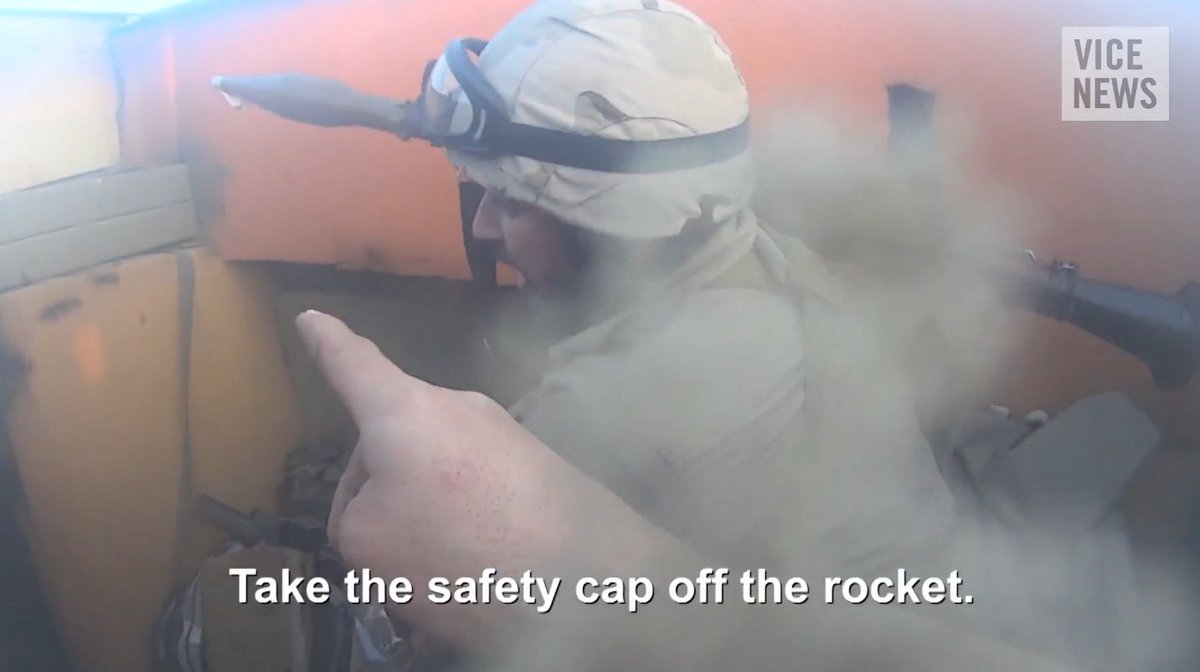
Nonsense. ISIS ordered a full safety stand down last week.

Hacker15e
Who am I? Where are my pants?
Nonsense. ISIS ordered a full safety stand down last week.
That video shows that they need some serious help in both the combat effectiveness realm and the safety realm!
Boris Badenov
Fortis Leader
That video shows that they need some serious help in both the combat effectiveness realm and the safety realm!
All true, but more importantly is hilarious.

The Fez
Analog Millennial
The "combat roll" at the end...I was laughing so hard I was seeing spots!Nonsense. ISIS ordered a full safety stand down last week.

esa17
Well-Known Member
I'm glad these guys got out safely, the other option is the big nightmare.
I flew with a copilot last week who didn't understand everything done in the warning areas is a calculated risk.
Safety for these guys is as high a priority as the mission allows and their professionalism isn't in doubt.
I flew with a copilot last week who didn't understand everything done in the warning areas is a calculated risk.
Safety for these guys is as high a priority as the mission allows and their professionalism isn't in doubt.