"...plenty of pilots willing to fly—if the pay’s right."

If there's a will, there is a way and I don't think it's unreasonable to pay Regional pilots $50k for as starting pay. Maybe it goes up slowly but now that 1500 hours is the minimum and the fact that you guys spend an X amount of money to earn your ratings, it's time to pay a professional. My assumption is by the time you meet the requirements, you are not an amateur anymore.
 
Kids today. No concept of how that's going to impact their quality of life as an adult. Chuckle it away...your lenders will expect that money back.

Exactly, that's a mortgage. $200k to fly three different model airplanes in a very rigid structure with approved cross country destinations is not my idea of fun. I was time building for instrument in rag and tube tailwheels flying from grass strip to grass strip. I laugh at the fact I earned the same degree online, flight trained at a mom & pop 61 school and had a ____ ton of fun not flying at a 141 operation for less than a 1/4 of his debt. Different strokes for different folks I guess.
 
A former student of mine is a junior or maybe a senior now at the big university and he informed me that he'll be $200k in debt at the end of it. He kind of chuckled when he shared this me with, as if he didn't realize how big a number that is. Granted I'm pretty sure he's not clipping coupons while grocery shopping or other methods of living on a budget.

There's nothing wrong with going to a community college first to knock out your Gen Ed's, then moving on to finish your degree. It can be affordable without putting you into a big hole. Many newer guys get suckered into the flight academies and universities where it costs $300/hour to fly a 172, plus the instructor, plus the university fees, and blah blah. I finished mine online after I found out how much I would save in the long run. Either that or just going to a inexpensive school are key. Flight training doesn't have to be expensive either. In 2006 I was paying $75/hour for a Cessna 152 during my Private Pilot training.
 
I didn't shell out all that money for training to become a regional airline pilot, I shelled it out to become a major airline pilot. Being a regional pilot is a step on that road.

So the difference is that your receptionist will be a receptionist for the rest of her life. She will make somewhere between miserable and ok money, depending on who she works for.

I won't.

That's a little unfair. My company hires receptionists, and then trains them to more toward HR roles. The receptionist a couple of years ago is now full time in our HR department and is in charge of recruitment. She's actually working on a degree in accountancy (and the company is contributing some of the cost of her education).

Most decent jobs have entry level positions. The difference is that some pilots seem to accept far worse conditions than in many other professions.
 
Folks, it more than the money. It's how people are (mis)managed.

Some fact of this industry is that bases open and close. Long-time CAL base at CLE is toast. They open, they close, ops continue. Until the airlines start buying houses (not going to happen), people are going to commute. Commuter-friendly policies and lines while not abusing the reserves (who could be commuting, too) make for a happy employee. Not just that, but a happy home ("happy wife, happy life").

Who cares that you might make $150k if a third goes to wife #1 and another to #2?
 
Can we go back to the concept of an easy to find 50k/yr 9-5 job? I would *love* to see the evidence that it actually exists.

I can't think of many careers that after 4-5 months of training (that's the career progression that regional pay is based on) would have you earning $35-50k after 2-3 years, with 60-100k possible simply by not screwing up. I'm not saying regional pay is fair or right, but that I suspect that a lot of regional pilots don't have the best idea of what the job market is like outside of the airlines.
 
Can we go back to the concept of an easy to find 50k/yr 9-5 job? I would *love* to see the evidence that it actually exists.

I can't think of many careers that after 4-5 months of training (that's the career progression that regional pay is based on) would have you earning $35-50k after 2-3 years, with 60-100k possible simply by not screwing up. I'm not saying regional pay is fair or right, but that I suspect that a lot of regional pilots don't have the best idea of what the job market is like outside of the airlines.

Lots of skilled trades fall into this category. For example, HVAC technicians. Pay generally starts out around $35-40k, but can get up to as much as $70k. Training takes about 6 months. Just one example.
 
Lots of skilled trades fall into this category. For example, HVAC technicians. Pay generally starts out around $35-40k, but can get up to as much as $70k. Training takes about 6 months. Just one example.

It's possible. But not probable. Most people are not in professions and/or situations that have such potential. Heck, I was a mechanical engineer for a few years and never cleared $70k.

I'm not making excuses for regional pay (most of it sucks). But let's be realistic here... Shall we just look at median income in the US? I bet it's not even close to $70k, and I haven't even cheated by googling it yet...
 
Gypsy, the problem is that people just don't want to do these jobs. They've been conned into believing that doing a skilled trade is "beneath them." It's not that these jobs are hard to find. To the contrary, there are shortages in many of these fields, and the pay is quite good. But everyone has been brainwashed into believing that they absolutely have to go to college, and a skilled tradesman is a lower class of person. It's ridiculous.
 
Gypsy, the problem is that people just don't want to do these jobs. They've been conned into believing that doing a skilled trade is "beneath them." It's not that these jobs are hard to find. To the contrary, there are shortages in many of these fields, and the pay is quite good. But everyone has been brainwashed into believing that they absolutely have to go to college, and a skilled tradesman is a lower class of person. It's ridiculous.

That is true. They are a good option for some people, and I COMPLETELY agree that there are some people in college that absolutely shouldn't be. But these jobs aren't exactly the best thing ever.

My Dad was a carpet installer for a good portion of his life, and he had to work his ass off (he owned his company). He eventually got hurt and had to go back to school for another career (software engineering of all things!). A good friend of mine is an ASE master tech at a Toyota dealer, and makes good money. But he works his ass off to do it. My normal work month looks like an amazing vacation to him! My brother's best friend is a general contractor, very smart guy, works hard, does good work, doesn't make that much. In fact, he makes about as much as I do but works 10x harder.

Again, I'm not making excuses for regional pay. But unless you're walking into a pretty sweet situation somehow, it can be tough to make a good buck regardless of what you're doing.
 
What's wrong with working your ass off? Of course there are few jobs out there that pay well AND don't require you to work very hard.

Plumbing, HVAC, Electrician are good careers but as Todd points out, as well as Mike Rowe, folks have been told over and over again that you need a degree to "succeed" in this world. Of the almost infinite amount of self owned businesses out there, those 3 are probably the easiest, relatively, to get up and running on your own in almost any market. HOWEVER, you have to be willing to work hard.
 
Mike Rowe is doing a great job of spreading the word about this.

I pay the foreman of my repair crew about $80k. He doesn't work very hard. Most of what he does is supervise the other guys. Yeah, they work hard. But in 20 years, they'll be doing what he's doing. And you know what? They'll be home every night, and they didn't spend one red cent on college.
 
What's wrong with working your ass off? Of course there are few jobs out there that pay well AND don't require you to work very hard.

Plumbing, HVAC, Electrician are good careers but as Todd points out, as well as Mike Rowe, folks have been told over and over again that you need a degree to "succeed" in this world. Of the almost infinite amount of self owned businesses out there, those 3 are probably the easiest, relatively, to get up and running on your own in almost any market. HOWEVER, you have to be willing to work hard.

Nothing wrong with doing that if it's what you want to do. But not everybody wants to work 6 days/wk while putting in 65+ hours. I've done it. Wasn't for me, don't do it anymore.

A friend of mine from college is a total workaholic. Work is his life, it is literally where he spends most of his life. He has a wife and kid too, so it's not like he's a single guy. If that's what you're into, great! Not me brother. Not at all.
 
You should probably sit down sometime and calculate how many hours you're away from home for that "easy" pilot job. Probably a lot more than that guy you know who is a "workaholic."
 
The wife makes $50K a year, no degree, on a salary, decorating for a design business. Sorry, but a trained aviator should be paid accordingly. Maybe wishing for too much? $hitte in one hand and wish in the other, see which one fills up first.
 
Breaking your back for a living is great until you can't work anymore at 45.

Ever see a 60 year old hanging drywall?
Hell. I lift more in one training session than a drywaller does in a week. I'll be competing well past my 40s.
 
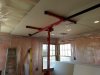
Yup, courtesy of a 61 year old all by himself!

He flies airplanes to get a rest from real work! After all, we know the Airbus is easy!
 

Attachments

  • image.jpg
    image.jpg
    299.6 KB · Views: 177
Hell. I lift more in one training session than a drywaller does in a week. I'll be competing well past my 40s.

BRO. Do you even lift?

:)

(my statement is germane to nothing, I just wanted to say it :))
 
Back
Top