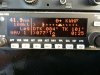
Learning to fly with guages vs. glass panels.

You got it that is the one, thanks.

I am going to have to buy you a beverage if I get to meet you.:beer:

I will gladly accept and buy the second one(s).

We had the DB Cooper 727-100 at PI for a while. It left PI, bounced around and was eventually scrapped in 1996.
Piedmont727AN%28N838N%29%28320%29.jpg
 
I love watching the 727 depart KCLT when I'm working. It's by far the loudest one out there. That and the Lear 25 blasts off. Sounds like an F-15 in full afterburner. I can't chime in about the history, etc as I know nothing about those airplanes! ;)
 
I love watching the 727 depart KCLT when I'm working. It's by far the loudest one out there. That and the Lear 25 blasts off. Sounds like an F-15 in full afterburner. I can't chime in about the history, etc as I know nothing about those airplanes! ;)

Aerion, the company working towards the SSBJ, will use the JT8D-219 series for its engines. It is a WORKHORSE engine. (The -200 series engines made it to the 727 only with the Valsan mods. It was intended for the 727-300 which never left paper. It was used on the MD-80 family)

http://www.aerioncorp.com/specifications

The Learjet 20 series used the CJ-610 which was the civilian version of the J-85 used on the T-38, the A-37 and the T-2 Buckeye. Lots of thrust, lots of noise for a small engine.
 
(my $0.02)

I have found glass both a blessing and a curse with my students. I inherited a student from another school. He had only flown the G1000 and wished to continue in our G1000 C172. He had already soloed. Fine. When we did our first dual x/c, I simulated an MFD failure and the guy became a deer caught in the headlights. Couldn't do it. I emphasize pilotage and d'ed reckoning anyway for primary guys, so this was our "work cut out."

On the other hand, when another student began instrument training and had flown mostly steam gauges, the 10-inch G1000 "cockpit classroom" made the flight portion of the holds lesson a snap, even when we switched off the MFD and entered VOR holds with attention only on the HSI.

So, pros and cons. Bottom line: "man's gotta know his limitations." Know thy aircraft!

-A.S.
 
Just think about making sense of all this...at night.. in weather.. and after sitting alert for a while.

Some of the old cockpits just make me shake my head in awe.

F-94C%20Starfire2.JPG
 
My personal opinion is that for a primary student, it doesn't matter.

Why?

Because they're supposed to be flying by looking out the window.

Your mileage may vary.
 
I'm very happy to be flying in an older, steam gauge airplane. Sure, I'd take a 430 if it was given to me, but since I am currently training for PPL (35 hours), the truth is I wouldn't have it any other way than I have it now.

The closest thing to glass in my trainer:
 

Attachments

  • 12136_1187814489696_1058310086_30459833_739845_n.jpg
    12136_1187814489696_1058310086_30459833_739845_n.jpg
    53.4 KB · Views: 61
Here in Brazil, they do their PPL in a taildragger, no AI, no DG. The compass is the only navigation instrument in the plane. They fly all over the place on X-C, Airspace here is ABCDEFG and they have a bunch of Terminal airspaces that don't exist in the US, everything above 3000AGL is controlled and you have to fly on a VFR route above that, you have to follow all the ck points on your log (you will have to put them in your Flight plan too) and tell the controller when you are over one and at what time you will reach the other (E6B!). Charts here are ONC nothing as an american VFR sectional.

IFR flying? NDB here is the rule...

I would stick with gauges for basic training and IFR, it's an easy switch the glass.

 
Back
Top