

You are using an out of date browser. It may not display this or other websites correctly.
You should upgrade or use an alternative browser.
You should upgrade or use an alternative browser.
Is the sabreliner gonna set a record today?
- Thread starter swisspilot
- Start date


Orange Anchor
New Member
Wouldn't the Jetstar have something to say about being the 'first' bizjet?
Alex.
You mean THIS one?

and how about this one?
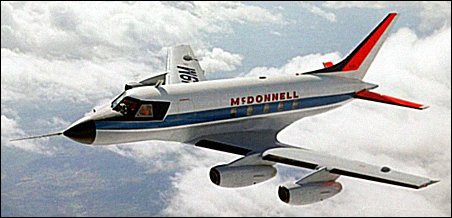


and how about this one?
She still proudly sits at ELP, the one and only ever built. Used to be at DVT and ABQ. Beautiful bird.

N519AT
Ahh! This is how I change this!
She still proudly sits at ELP, the one and only ever built. Used to be at DVT and ABQ. Beautiful bird.
It is.
Do they fly it at all or is it static?
It is.
Do they fly it at all or is it static?
Yeah, just saw it yesterday, just before having lunch with JC member Blackhawk. I don't think it has an Airworthiness Cert anymore. It used to be at DVT with Harry Robertson's Flight Safety Foundation (the outfit that did all the crash tests you often see of DC-7s/L-1049s). Was never used for crash testing and was purchased and flown to ABQ where it sat for a long time before ending up in ELP.
Also a beautiful CV-990 there, among many other neat types laying around.
Orange Anchor
New Member
She still proudly sits at ELP, the one and only ever built. Used to be at DVT and ABQ. Beautiful bird.
I saw it last at ABQ along with the Comet and other odd birds.

Mariano
Well-Known Member
After going through their website, everything just look like a bunch of BS to me
I can't see how flying with a co-pilot, with fuel stops, in an aircraft that by the way has a pooper, can compare with Fosset's feat.
On March 19, Riccardo Mortara and his crew will set off from Geneve, Switzerland, and plan to return to that same location within 67 hours in an attempt to beat the Steve Fossett's time for fastest circumnavigation around the globe in it's category
The FAI is the international federation of air sports and administrates flying championships around the world.
Among its sporting responsibilities, the FAI draws up and ratifies the rules and codes of conduct for setting world records, both aeronautical and astronautical. It awards certificates to successful claimants.
- The objective of this record task is to achieve the greatest speed around the world in an eastbound direction.
- The course shall be a closed circuit course that crosses all meridians.
- The course shall be approved or declared in writing prior to take-off.
- The course distance from start point through each control point to the finish should be no less than 36,700km.
- All control points should lie at latitudes of less than 66 degrees, 33 minutes.
- All control points shall be flown in easterly succession.
- One alternate course may be declared. If so, it shall be declared in writng prior to take-off.
- The flight performance begins at take-off and ends with a landing at the finish point.
- Intermediate landings are permitted during the flight performance.
- Time on the ground at intermediate landing places shall count as flying time.
- Refueling on the ground is permitted.
- Refueling in-flight is not permitted.
- Repairs or replace­ments of aircraft components and engine(s) are permitted except the wings and the fuselage shall not be changed.
- The flight crew shall not be changed during the flight performance. A crewmember other than the Person In Charge may leave, but shall not be replaced.
- Passengers may be replaced during the flight performance.
- If the landing cannot be made at the departure aerodrome, the aeroplane shall fly the last leg of the course to an alternate aerodrome located further east than the departure aerodrome.
- The achieved speed shall be determined by dividing the distance of the course by the elapsed time.
I can't see how flying with a co-pilot, with fuel stops, in an aircraft that by the way has a pooper, can compare with Fosset's feat.
I see they've got some humor (humour?) as seen on their destination page.
Alaska’s largest city is best known for bears, moose, fishing and former governor and vice presidential nominee Sarah Palin.

Mariano
Well-Known Member
just saw on the news they beat the record.
Sorry, I'm still trying to understand which record they broke exactly
I can't see how flying with a co-pilot, with fuel stops, in an aircraft that by the way has a pooper, can compare with Fosset's feat.
They were going for the speed record.
Fosset's solo non-stop circumnavigation is one that I don't think will be eclipsed any time soon, and obviously it's the more historic feat. But if they did manage it, it is the fastest circumnavigation of the globe. And that's not nothing.
Orange Anchor
New Member
I can't see how flying with a co-pilot, with fuel stops, in an aircraft that by the way has a pooper, can compare with Fosset's feat.
Simple. Different rules for different classes. Fossett's flight was classified as solo/non-stop/single-engine.

NJA_Capt
Well-Known Member
The record was for "time in Category" which was 9000-12000kgSorry, I'm still trying to understand which record they broke exactly
Steve Fossett did it in a Citation X, which is heavier than the Sabre. I respect the Sabre, but it isn't going to beat Fossett's run. Fossett flew Westbound and beat the Sabre by 6 hours. His Eastbound record is 10 hours faster!
Good luck beating the fastest civilian US crossing (Fossett).....SAN-CHS 2:56.
Mariano
Well-Known Member
Simple. Different rules for different classes. Fossett's flight was classified as solo/non-stop/single-engine.
Their website says that they're trying to beat Fosset's record. They also say that Fosset's aircraft was built specifically for that purpose.
It just seems as if they actually stating that both flights are in the same category.
The record was for "time in Category" which was 9000-12000kg
Steve Fossett did it in a Citation X
Then I don't understand this statement: "Riccardo will not fly state-of-the-art aircraft built specially for this world record attempt, instead, he will fly his trusty, 29 year old Sabreliner 65"
If the record they're talkin about is Fosset in a Citation X, then the Citation wasn't biult for that purpose. I don't know is all a bit confusing, or purely misleading.