Filing for possible fuel stop

Status
Not open for further replies.

denver

New Member
Hello all,

Good forum and first post here.

Let's say I am flying a Cessna 421 from Watsonville, CA (WVI) to Yuma, AZ (NYL) and am anticipating a possible fuel stop but am not shure until airborne and on my way into the flight a little. Would it be better to:

A. File to Yuma and then if it became necessary to divert, change my destination. Would I then need to file a seperate FP to Yuma or would I be able to pick up a pop up on the ground at the stop if I negotiate with the center/tracon guy before landing because Yuma was my origional destination.

B. File to the fuel stop and another to Yuma and if it became apparent it was safe to continue to Yuma either change destination to Yuma or switch FP's to the Yuma one.

C. File only to the fuel stop and if it became apparent it was safe to continue to Yuma, then change my destination to Yuma w/o that second FP.

Thanks guys.
 
Here is what I would do -- What you sign your name to has to be legal. So if you can flightplan to Yuma and calculate that you can arrive at Yuma with :45 minutes of fuel (plus an alternate if required) then do so. You can then file a second flight plan from an intermediate point to Yuma -- if, once airborne, your calculations do not appear that they are going to work out, then you can change your destination to that intermediate spot where you have, presumably, already looked at weather, notams, TFRs etc. You'll already have a flight plan on file to Yuma so your delay will be minimal.

If you file to Yuma and change your destination due to unforecast winds -- that's being a responsible and conservative airman. If you file to ABC and then change the destination to Yuma because the winds appear to be more favorable... and then DON'T make it to Yuma, your decision making may be in question.

I fly an airplane where fuel is almost always critical, so we deal with these questions all the time -- especially in winter with widespread IFR and required alternates. Bottom line, don't sign a flight plan that doesn't meet the FAR requirements for fuel.

Welcome to the forum. Most of these folks are very friendly, have a wealth of experience, and are willing to mentor their fellow pilots.
 
In the military, we have what are known as "stopover" flightplans, both VFR and IFR. They can be used either for dropping into a field enroute, or for delaying at a particular intermediate destination for practice approaches, etc, prior to proceeding to the final destination. Im not aware, however, if this can be done in the civilian world as I haven't filed a civil flight plan in over 14 years.

Stopover flight plans are utilized by pilots whenever stops at more than one airport are intended.
In many instances, a particular destination is too distant to reach in one flight. Therefore, it is
necessary to make one or more fueling stops in order to reach the final destination airport. The
stopover flight plan enables a pilot to fill out one DD 175 at the beginning of the flight which
will cover the entire trip. Filling out a DD 175 in this manner saves the pilot the trouble of
having to file a separate flight plan at each airport. The stopover flight plan is identical to the
"single-flight" plan, with a few exceptions.
 
Yea, fuel is now going to be allot more critical for us with our new clients. These guys are real big and going relatively far as compared with my usual airports. It would be nice to have a "pause" button for IFR flight plans. But what Zapbrannigan suggested works easily enough. It would also be nice to have midair refueling. Maybe we could start a service for that.
 
I do pretty much the same as Zap. If the flight planning shows it likely (or even just 'possible') that a fuel stop is needed I will file two flight plans to include the fuel stop. If, once airborne, the calculations show that we can safely make the final destination without a stop I will let ATC know while airborne, giving them the new destination and the reason for the change. I think that it is much smarter from a psychological standpoint to put myself in the position where I must CONVINCE myself that it is safe to continue to the final destination, rather than put myself in the situation where I must CONVINCE myself that I should make an en-route stop. It is also easier to tell the clients good news (no fuel stop needed) than bad news (delay needed for refueling).

Whenever possible, stack the deck conservatively in your favor.
 
I do pretty much the same as Zap. If the flight planning shows it likely (or even just 'possible') that a fuel stop is needed I will file two flight plans to include the fuel stop. If, once airborne, the calculations show that we can safely make the final destination without a stop I will let ATC know while airborne, giving them the new destination and the reason for the change. I think that it is much smarter from a psychological standpoint to put myself in the position where I must CONVINCE myself that it is safe to continue to the final destination, rather than put myself in the situation where I must CONVINCE myself that I should make an en-route stop. It is also easier to tell the clients good news (no fuel stop needed) than bad news (delay needed for refueling).

Whenever possible, stack the deck conservatively in your favor.

So you're saying the stopover flightplan is not for civilians?
 
As a controller I agree with what Zap said. If you should be legal, file it, if later on it isn't safe change your destination. If you will probably need the fuel stop then turns out you don't, tell the controller whats going on. "Hey looks like I have enough fuel for Yuma after all!" Change of destinations to direct to your ultimate destination aren't hard for us to do. Having to put in a new flight plan for an unexpected fuel stop is much harder and might get met with a "Call FSS on the ground". Pro tip. If you want a faster clearance from the intermediate fuel stop if you make use of it ask for the direct phone number to the approach/center if it isn't a towered airport or one with an RCO. Call us up before you close the doors, just let us know roughly how long you need and don't come back with something like "Eh we'll be ready to depart in 30 minutes." Bonus points if its VMC and if allowed by your company you say, "Hey well be back in X minutes VFR outta here to pick up our IFR."
 
No, just saying that I'm not familiar with, nor use, such a beast.

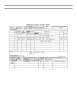
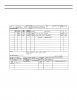
I posted the description above in my first post in the thread, but haven't seen it in civilian circles. That doesn't mean it doesn't exist there though. Am curious since I used to use the stopover flightplan all the time. In the stopover flightplan, we file the enroute portion just like a regular flightplan, we just put a "circle R", for Remark, and "D", meaning delay, and the amount of the delay, and where its going to be. For example, "D = 2+00, KPHX"; or delay for 2 hours at PHX, and down in the remarks section we put what they delay is for. The first one is a Terminal Delay, while the second is a Stopover (essentially two flightplans).

Though its a different form, I wonder if you can fill the standard flightplan out like this:
 

Attachments

  • delay.jpg
    delay.jpg
    97.1 KB · Views: 1,118
  • stopover.jpg
    stopover.jpg
    94.7 KB · Views: 1,148
I do pretty much the same as Zap. If the flight planning shows it likely (or even just 'possible') that a fuel stop is needed I will file two flight plans to include the fuel stop. If, once airborne, the calculations show that we can safely make the final destination without a stop I will let ATC know while airborne, giving them the new destination and the reason for the change. I think that it is much smarter from a psychological standpoint to put myself in the position where I must CONVINCE myself that it is safe to continue to the final destination, rather than put myself in the situation where I must CONVINCE myself that I should make an en-route stop. It is also easier to tell the clients good news (no fuel stop needed) than bad news (delay needed for refueling).

Whenever possible, stack the deck conservatively in your favor.

Excellent..

To convince yourself why you should continue is a great way to think in this case. Dealing with the PAX in this way is also way more preferable. Some of these guys are used to the King Air. They also know they are paying less $500 an hour for the aircraft and that means in some cases less range.

Or I could tell them to loose some weight.:eek:

Thanks everyone
 
I posted the description above in my first post in the thread, but haven't seen it in civilian circles. That doesn't mean it doesn't exist there though. Am curious since I used to use the stopover flightplan all the time. In the stopover flightplan, we file the enroute portion just like a regular flightplan, we just put a "circle R", for Remark, and "D", meaning delay, and the amount of the delay, and where its going to be. For example, "D = 2+00, KPHX"; or delay for 2 hours at PHX, and down in the remarks section we put what they delay is for. The first one is a Terminal Delay, while the second is a Stopover (essentially two flightplans).

Though its a different form, I wonder if you can fill the standard flightplan out like this:

I do not think FSS has such forms and I have never heard of such. It would be great if us civis could flight plan like this but I do not think we can. It seems like there should be another few boxes on the 7233-1 for this one.
 
I do not think FSS has such forms and I have never heard of such. It would be great if us civis could flight plan like this but I do not think we can. It seems like there should be another few boxes on the 7233-1 for this one.

Would definitely be useful for exactly what you're trying to do. As I've said, though I haven't seen them in civil use, I don't know if that means they can't be used for civil use. Only other method is exactly what Zap and Steve suggested.
 
I always would just divert mid flight... I've done it a few times just to be cautious before entering Class B airspace in case I get vectored around or told to hold for an extended period of time. Then I just take back off after refueling and they have always filed me a new flight plan in the air.
 
I just learned today (ATC training) that there is a "through clearance," which is the same as what you described as a stopover flightplan. So controllers know about this, but I had never heard of it, nor do I know how to get one, as a commercial pilot.
 
Excellent..

To convince yourself why you should continue is a great way to think in this case. Dealing with the PAX in this way is also way more preferable.

I'm happy to say that it is also a corporate cultural decision where I work. The scheduling department will actually build the fuel stop into the initial quotation and subsequent communications with the customer if there is the slightest question, and this is prior to the PIC even getting involved. If they are not sure they will have either the Chief or Assistant Chief do a flight analysis very early in the quote process. If, after the PIC has done his preflight planning, he decides that a fuel stop would be prudent because the winds have substantially changed (or other reason) the schedulers will update the passengers. That takes the pressure off the PIC, and is the safe way to handle the situation in my opinion.
 
Our schedulers will do the same as Steve's when they predict a fuel stop will be necessary. They are very conservative so occasionally we will have the pleasure of letting the passengers know that we'll be able to get them home nonstop. That is far preferable to the alternative.
 
Our owners ask if they can take one more passenger than the plane will hold and then ask why the hell a Lear 55 can't fly 5 hours non-stop out of a 4500' strip.
 
Just wanted to bring this post back from the dead. Every structured ATC course I have ever taken with the FAA has discussed through clearances, but it seems they are never used, and apparently no one knows about them.

So, do you know about, or have ever used a through clearance?
 
Status
Not open for further replies.
Back
Top