Allegiant Engine Fire

This is great news that nothing bad happened. Nice job on part of the crew. I would love to hear the cause of this problem, if there actually was a problem with the engine.
 
Glad to hear they got down safely. I was always impressed with Allegiant and their pilots! :clap::rawk::clap:
 
Good work getting it there. Could've been worse had the engine still been involved on landing, as FLG is only an Index A airport. Though having some pre-warning, I'm sure, definitely helped.
 
Good work getting it there. Could've been worse had the engine still been involved on landing, as FLG is only an Index A airport. Though having some pre-warning, I'm sure, definitely helped.

I'm not even going to act like I forgot that one. Index A?
 
I'm not even going to act like I forgot that one. Index A?

14 CFR 139 ARFF Index. Airports are classified as A through E based on equipment available and agent capacity. Nothing to really have forgotten, as the average pilot isn't really aware of it....kind of transparent to us day to day; and is more "nice to know" info vs "need to know". As a former (and still contract current) ARFF firefighter, it's just minutia that I notice or remember. Index A is pretty much the lowest, for aircraft less than 90', requiring only one ARFF vehicle.....may even be a small response vehicle...and 100 gals water/foam and 450 lbs of PKP dry chem. Pretty small for an MD-80 series jet, if there had been little to no prior warning of arrival and still with a fire.

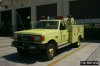
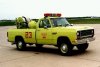
Representative vehicle:
 

Attachments

  • P-20.jpg
    P-20.jpg
    22.7 KB · Views: 58
  • P-20-V1.jpg
    P-20-V1.jpg
    18.4 KB · Views: 44
I wonder if/what would have been a better option. There aren't a whole lot of airports up that way. Depending on which way they were coming in from, Vegas and Phoenix (or Willie) could have been a ways off. How's the ARFF at PRC or Grand Canyon?

Stuff I don't worry about on the east coast so much when there is a "suitable" airport every 50 miles.
 
I wonder if/what would have been a better option. There aren't a whole lot of airports up that way. Depending on which way they were coming in from, Vegas and Phoenix (or Willie) could have been a ways off. How's the ARFF at PRC or Grand Canyon?

Stuff I don't worry about on the east coast so much when there is a "suitable" airport every 50 miles.

PRC and GCN are both Index A too. PRC has a single 1500 gal E-One Titan crash truck. GCN has one truck too, but I can't remember the exact type. GCN got smacked for lack of ARFF services following the fatal 1989 landing accident of Grand Canyon Airlines 5, a DHC-6, where there was a delayed response and little equipment available.

It's a tough call. You don't want to keep a burning aircraft airborne (if it still was) and FLG has sufficient runway, though it's a little tight on the fire protection, if there's little to no notice.
 
14 CFR 139 ARFF Index. Airports are classified as A through E based on equipment available and agent capacity. Nothing to really have forgotten, as the average pilot isn't really aware of it....kind of transparent to us day to day; and is more "nice to know" info vs "need to know". As a former (and still contract current) ARFF firefighter, it's just minutia that I notice or remember. Index A is pretty much the lowest, for aircraft less than 90', requiring only one ARFF vehicle.....may even be a small response vehicle...and 100 gals water/foam and 450 lbs of PKP dry chem. Pretty small for an MD-80 series jet, if there had been little to no prior warning of arrival and still with a fire.

Representative vehicle:

Is that information readily available to pilots? It's a very interesting but important detail. As Ethan said we're lucky on the east coast with a major airport usually less than 50 miles away.
 
14 CFR 139 ARFF Index. Airports are classified as A through E based on equipment available and agent capacity. Nothing to really have forgotten, as the average pilot isn't really aware of it....kind of transparent to us day to day; and is more "nice to know" info vs "need to know". As a former (and still contract current) ARFF firefighter, it's just minutia that I notice or remember. Index A is pretty much the lowest, for aircraft less than 90', requiring only one ARFF vehicle.....may even be a small response vehicle...and 100 gals water/foam and 450 lbs of PKP dry chem. Pretty small for an MD-80 series jet, if there had been little to no prior warning of arrival and still with a fire.

Representative vehicle:


Not sure if you mean that's the kind of vehicle FLG has, but when I watched the news here in PHX last night, it showed 1 or 2 of those big honkin fire trucks where the driver sits in the middle...same kinda deal I see every day at PHX.
 
Is that information readily available to pilots? It's a very interesting but important detail. As Ethan said we're lucky on the east coast with a major airport usually less than 50 miles away.

Its in the AFD for every airport that has an Index. Otherwise it'll say "ARFF Index Limited" (a term nearly phased out, minimum now A). When my contract truck goes out on assignments for helispots, etc, I just barely meet Index A.
 
Not sure if you mean that's the kind of vehicle FLG has, but when I watched the news here in PHX last night, it showed 1 or 2 of those big honkin fire trucks where the driver sits in the middle...same kinda deal I see every day at PHX.

They may have picked up some new ones. Don't know why they're not at least an Index B airport, if they have that though.
 
It's in the AFD, but it's written in tongue.:D

Generally, it applies to airports with scheduled air carrier ops or some kind; the civilian side of joint-use airports (even if the military side has an Index itself), and of course large airports. Heliports are excluded. For some comparison, KIGM is an Index A airport, KHII is an Index A/B airport, KIWA is an Index C airport, and KPHX is an Index D airport.

What's required based on aircraft length and number of operations, is in 14 CFR 139.315:

a) An index is required by paragraph (c) of this section for each certificate holder. The Index is determined by a combination of—

(1) The length of air carrier aircraft and

(2) Average daily departures of air carrier aircraft.

(b) For the purpose of Index determination, air carrier aircraft lengths are grouped as follows:

(1) Index A includes aircraft less than 90 feet in length.

(2) Index B includes aircraft at least 90 feet but less than 126 feet in length.

(3) Index C includes aircraft at least 126 feet but less than 159 feet in length.

(4) Index D includes aircraft at least 159 feet but less than 200 feet in length.

(5) Index E includes aircraft at least 200 feet in length.

Under 14 CFR 139.317, here's the breakdown of vehicle/agent capacity for each Index above. The (a) section below is what I comply with with my vehicle, with approved agent substitutions:

(a) Index A. One vehicle carrying at least—

(1) 500 pounds of sodium-based dry chemical, halon 1211, or clean agent; or

(2) 450 pounds of potassium-based dry chemical and water with a commensurate quantity of AFFF to total 100 gallons for simultaneous dry chemical and AFFF application.

(b) Index B. Either of the following:

(1) One vehicle carrying at least 500 pounds of sodium-based dry chemical, halon 1211, or clean agent and 1,500 gallons of water and the commensurate quantity of AFFF for foam production.

(2) Two vehicles—

(i) One vehicle carrying the extinguishing agents as specified in paragraphs (a)(1) or (a)(2) of this section; and

(ii) One vehicle carrying an amount of water and the commensurate quantity of AFFF so the total quantity of water for foam production carried by both vehicles is at least 1,500 gallons.

(c) Index C. Either of the following:

(1) Three vehicles—

(i) One vehicle carrying the extinguishing agents as specified in paragraph (a)(1) or (a)(2) of this section; and

(ii) Two vehicles carrying an amount of water and the commensurate quantity of AFFF so the total quantity of water for foam production carried by all three vehicles is at least 3,000 gallons.

(2) Two vehicles—

(i) One vehicle carrying the extinguishing agents as specified in paragraph (b)(1) of this section; and

(ii) One vehicle carrying water and the commensurate quantity of AFFF so the total quantity of water for foam production carried by both vehicles is at least 3,000 gallons.

(d) Index D. Three vehicles—

(1) One vehicle carrying the extinguishing agents as specified in paragraphs (a)(1) or (a)(2) of this section; and

(2) Two vehicles carrying an amount of water and the commensurate quantity of AFFF so the total quantity of water for foam production carried by all three vehicles is at least 4,000 gallons.

(e) Index E. Three vehicles—

(1) One vehicle carrying the extinguishing agents as specified in paragraphs (a)(1) or (a)(2) of this section; and

(2) Two vehicles carrying an amount of water and the commensurate quantity of AFFF so the total quantity of water for foam production carried by all three vehicles is at least 6,000 gallons.

(f) Foam discharge capacity. Each aircraft rescue and firefighting vehicle used to comply with Index B, C, D, or E requirements with a capacity of at least 500 gallons of water for foam production must be equipped with a turret. Vehicle turret discharge capacity must be as follows:

(1) Each vehicle with a minimum-rated vehicle water tank capacity of at least 500 gallons, but less than 2,000 gallons, must have a turret discharge rate of at least 500 gallons per minute, but not more than 1,000 gallons per minute.

(2) Each vehicle with a minimum-rated vehicle water tank capacity of at least 2,000 gallons must have a turret discharge rate of at least 600 gallons per minute, but not more than 1,200 gallons per minute.

(g) Agent discharge capacity. Each aircraft rescue and firefighting vehicle that is required to carry dry chemical, halon 1211, or clean agent for compliance with the Index requirements of this section must meet one of the following minimum discharge rates for the equipment installed:

(1) Dry chemical, halon 1211, or clean agent through a hand line—5 pounds per second.

(2) Dry chemical, halon 1211, or clean agent through a turret—16 pounds per second.

(h) Extinguishing agent substitutions. Other extinguishing agent substitutions authorized by the Administrator may be made in amounts that provide equivalent firefighting capability.

(i) AFFF quantity requirements. In addition to the quantity of water required, each vehicle required to carry AFFF must carry AFFF in an appropriate amount to mix with twice the water required to be carried by the vehicle.

(j) Methods and procedures. FAA Advisory Circulars contain methods and procedures for ARFF equipment and extinguishing agents that are acceptable to the Administrator.

 
Back
Top