

You are using an out of date browser. It may not display this or other websites correctly.
You should upgrade or use an alternative browser.
You should upgrade or use an alternative browser.
Air Force may outsource pilot training
- Thread starter RDoug
- Start date


fholbert
Mod's - Please don't edit my posts!
They did the same during WWII and that one seemed to work out well.

USMCmech
Well-Known Member
Actually it worked out horribly, but there was a rather large war on, so nobody paid much attention.They did the same during WWII and that one seemed to work out well.
The US Army Air Corps suffered between 5-10% losses just in training and deploying to the combat theatres. Between rushed flight training, poorly trained mechanics, and shoddly built airplanes, there were a horrific amount of accidents on the homefront.
fholbert
Mod's - Please don't edit my posts!
Actually it worked out horribly, but there was a rather large war on, so nobody paid much attention.
At the time that may have been the normal accident rate. Putting teenagers in the cockpit of a heavy bomber or an over-powered fighter may have had something to do with it too.
I sat in a meeting today for a test flight on a 737 after extensive upgrades.
The designated FAA inspector sitting right seat was 93 years old, a former WWII B-24 pilot with 40 combat missions under his belt. He was moved to the left seat of the B-24 with 225 hours total time. At the ripe old age of 19 (nineteen) he was bombing the Japanese on the Philippines when his Liberator received a lot of battle damage. He managed to get the B-24 home saving his entire crew.
At 19 years of age he received the Distinguished Flying Cross. It was a real honor to meet the gentleman.
I found this on line: http://uscgaux12-07.blogspot.com/2017/06/the-history-and-military-service-of-12.html

Bear
Well-Known Member
http://www.flighttestsafety.org/ima...able_moments_from_38yearsof_test_piloting.pdfThe designated FAA inspector

Lawman
Well-Known Member
We've been using civilians in military flight training forever. Most of them are retirees who continue to work the flight line or simulator centers after they finish. This isn't anything new or substandard, just a expansion of existing practices to keep active pilots out of white jets and in the active fleet where they are most needed.
Sent from my iPhone using Tapatalk
Sent from my iPhone using Tapatalk

AAPalmTree
Well-Known Member
I sat in a meeting today for a test flight on a 737 after extensive upgrades.
So it’s getting close to A320 technology?
fholbert
Mod's - Please don't edit my posts!
So it’s getting close to A320 technology?
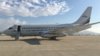
Yea, pretty close. The 737 air-frame was built in 1975.
Attachments
Bear
Well-Known Member
This is a national security crisis.
JOINT BASE ANDREWS, Md. (AFNS) -- More than 60 Air Force senior leaders discussed the Air Force’s aircrew crisis which has left the service more than 1,500 pilots short of its requirements Sept. 22, 2017, at Joint Base Andrews, Maryland.
“We are in a crisis,” said Air Force Chief of Staff Gen. David L. Goldfein. “We’re 1,500 pilots short, and if we don’t find a way to turn this around, our ability to defend the nation is compromised.”
Throughout the day, Goldfein challenged presenters and leaders to develop new and creative solutions for problems ranging from pilot training limitations to filling staff positions to retention.
“We need to stay focused,” said Goldfein. “We’re doing this to increase the readiness and lethality of the force. This is a warfighting imperative.”
The 2017 Aircrew Summit is part of the Air Force’s Aircrew Crisis Task Force’s ongoing efforts to address the service’s growing shortage of experienced aircrew. Air Force senior leaders from the headquarters, major commands and other experts discussed strategies, plans and initiatives falling under the ACTF’s seven lines of effort: requirements, accessions, production, absorption, retention, sortie production and industry collaboration.
“We presented some ideas to General Goldfein that are the first steps in completely changing how the Air Force recruits, trains, manages and employs our aircrew,” said Brig. Gen. Mike Koscheski, the Air Force’s Aircrew Crisis Task Force director.
Leaders at the summit were briefed on proposed retention initiatives to limit and incentivize non-command 365-day deployments, production initiatives that prioritize flying training and offer alternative methods of aviator training and requirement initiatives that adjust crew ratios and balance instructor pilot numbers.
Increasing assignment process transparency and career predictability for Airmen were frequent themes at the summit’s retention discussions. Although the majority of proposals discussed were designed specifically to address the aircrew crisis, Air Force leaders also discussed the need to expand initiatives to take care of non-rated Airmen and families as well.
“Changing how we manage an all-volunteer force won’t be a quick process, but we must make those first changes so we can gain momentum,” said Lt. Gen. Dash Jamieson, Deputy Chief of Staff for Intelligence, Surveillance and Reconnaissance. “Our Airmen get a vote, and they need to know we’re listening to them and acting on their feedback.”
The challenge of retaining qualified aircrew is compounded by limitations on the Air Force’s ability to train sufficient numbers of pilots each year, making it more critical to retain each individual.
Participants also discussed various options for increasing pilot production through contract support or additional aircraft, which would enable the Air Force to train more pilots. Additionally, briefers presented options for limiting staff positions and lengthy deployments for fighter pilots, which currently account for the majority of the service’s pilot shortage.
“This is a wicked problem,” Koscheski said, referring to the critical pilot shortage and proposed solutions to improve retention. “The problem is not only ever-changing, it fights back. You can’t just fix one aspect. They’re interrelated.”
http://www.af.mil/News/Article-Display/Article/1321906/air-force-leaders-address-aircrew-crisis/
JOINT BASE ANDREWS, Md. (AFNS) -- More than 60 Air Force senior leaders discussed the Air Force’s aircrew crisis which has left the service more than 1,500 pilots short of its requirements Sept. 22, 2017, at Joint Base Andrews, Maryland.
“We are in a crisis,” said Air Force Chief of Staff Gen. David L. Goldfein. “We’re 1,500 pilots short, and if we don’t find a way to turn this around, our ability to defend the nation is compromised.”
Throughout the day, Goldfein challenged presenters and leaders to develop new and creative solutions for problems ranging from pilot training limitations to filling staff positions to retention.
“We need to stay focused,” said Goldfein. “We’re doing this to increase the readiness and lethality of the force. This is a warfighting imperative.”
The 2017 Aircrew Summit is part of the Air Force’s Aircrew Crisis Task Force’s ongoing efforts to address the service’s growing shortage of experienced aircrew. Air Force senior leaders from the headquarters, major commands and other experts discussed strategies, plans and initiatives falling under the ACTF’s seven lines of effort: requirements, accessions, production, absorption, retention, sortie production and industry collaboration.
“We presented some ideas to General Goldfein that are the first steps in completely changing how the Air Force recruits, trains, manages and employs our aircrew,” said Brig. Gen. Mike Koscheski, the Air Force’s Aircrew Crisis Task Force director.
Leaders at the summit were briefed on proposed retention initiatives to limit and incentivize non-command 365-day deployments, production initiatives that prioritize flying training and offer alternative methods of aviator training and requirement initiatives that adjust crew ratios and balance instructor pilot numbers.
Increasing assignment process transparency and career predictability for Airmen were frequent themes at the summit’s retention discussions. Although the majority of proposals discussed were designed specifically to address the aircrew crisis, Air Force leaders also discussed the need to expand initiatives to take care of non-rated Airmen and families as well.
“Changing how we manage an all-volunteer force won’t be a quick process, but we must make those first changes so we can gain momentum,” said Lt. Gen. Dash Jamieson, Deputy Chief of Staff for Intelligence, Surveillance and Reconnaissance. “Our Airmen get a vote, and they need to know we’re listening to them and acting on their feedback.”
The challenge of retaining qualified aircrew is compounded by limitations on the Air Force’s ability to train sufficient numbers of pilots each year, making it more critical to retain each individual.
Participants also discussed various options for increasing pilot production through contract support or additional aircraft, which would enable the Air Force to train more pilots. Additionally, briefers presented options for limiting staff positions and lengthy deployments for fighter pilots, which currently account for the majority of the service’s pilot shortage.
“This is a wicked problem,” Koscheski said, referring to the critical pilot shortage and proposed solutions to improve retention. “The problem is not only ever-changing, it fights back. You can’t just fix one aspect. They’re interrelated.”


chrisreedrules
Master Blaster
This.Expand the age, let people start at 35 or 40. Get 15 or 20 good years.

av8tr1
"Never tell me the odds!"
Expand the age, let people start at 35 or 40. Get 15 or 20 good years.
This x1000. At 46 I would jump at this in less than a heartbeat.
Hell if there was any intelligence at the top they would be taking all those Army aviators they have recently thrown to the curb and retask them for the Air Force. But no that would make too much sense.

hook_dupin
Well-Known Member
Expand the age, let people start at 35 or 40. Get 15 or 20 good years.
My view: we don't have a recruiting problem. We have a retention problem. I don't understand why the 54 year olds would stay any longer than the 34 year olds.
Lawman
Well-Known Member
My view: we don't have a recruiting problem. We have a retention problem. I don't understand why the 54 year olds would stay any longer than the 34 year olds.
You could argue their kids are more likely out of the house, but that's not gonna buy you much.
The SECAF went in front of congress begging to do something legally to prevent the airlines from hiring all the pilots away. That's a sign that says "my well is so bad I need you to poison these other ones so people will keep drinking from it."
RDoug
Well-Known Member
My view: we don't have a recruiting problem. We have a retention problem. I don't understand why the 54 year olds would stay any longer than the 34 year olds.
A lot of truth in this one. Pilots want to fly; not file reports, attend classes, and put up with every wing commanders' "supplements" to existing Air Force regs. It was getting bad when I got out of the Air Force, and it's infinitely worse now from what I'm hearing.

Springer
Well-Known Member
A lot of truth in this one. Pilots want to fly; not file reports, attend classes, and put up with every wing commanders' "supplements" to existing Air Force regs. It was getting bad when I got out of the Air Force, and it's infinitely worse now from what I'm hearing.
Mark Welch was T-37 FAIP when the mass exodus (me included) occurred in '78 & '79. Did he did not understand the issues when he was Chief of Staff?
We've been using civilians in military flight training forever.


Nark
Macho Superpilot
100% on target.
It's a retention issue, not a recruiting issue.
It's quite possible, on the Army side at least, to go from 0-wings from civilian IP's.
I had civilian IP's for: primary, instruments and basic war fighting. It wasn't until I got to hawks, when I flew with my first green-suiter.
I would say 90% of the civilian IP's were retired military dudes. Some were current guard/reserve pilots as well.

ppragman
No pasa nada.
I've said it before and I'll say it again - I think the army is on-point with the idea of "warrant officers" for aviators.
I'd quit too if I had to do irrelevant BS paperwork 12 hours a day to fly 300hrs per year. It's not that those guys don't have BS to deal with too, rather, in my experience the AF guys I've known and worked with all said, the same thing - the flying is awesome, the job sucks.
One guy said it was basically like being chief pilot at the worlds most bureaucratic 135 operation without the ability to change anything. Screw that.