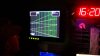
KDMA ILS Rwy 12...

GCA is like a limited RAPCON. But any AF controller can go to a base with a GCA and train in it just as if it was another rapcon or tower.

it's just bad ass, especially when the WX is crap and lower than Cat 1 ILS mins; yet this old-school technology that's human-dependant, can still get the job done and done well.
 
it's just bad ass, especially when the WX is crap and lower than Cat 1 ILS mins; yet this old-school technology that's human-dependant, can still get the job done and done well.

I remember doing a couple at Tyndall when the sea fog rolled in earlier than expected so jets were still out in the warning areas or moa's and the wx was so bad that the runway wasn't reported in sight til touchdown.
 
Are all RAPCON controllers also GCA controllers, for AFBs that have them?

Yes, typically the first position a controller get checked out on. I'd think even if the PAR was gone today they would still do SAR approaches.

However, not all GCA facility's are a RAPCON or approach control. Some GGA facility's are final approach only with traffic handed off by another facility approaching a 10 mile final. I think LAX had a AF GCA to one runway into the mid 70's.

I disliked the PAR position when I was a controller too but my last 4 or 5 weeks before separation I was happy to stay out of the approach, arrival, departure, flight data positions and hide at the PAR scopes, way down at the end of the console, working just one aircraft at a time. I saw people separating before me do the same thing.

FLASHBACK!!!
198973_par_approach_radar_screen.jpg
 
FLASHBACK!!!
198973_par_approach_radar_screen.jpg

Isn't your scope incorrectly labeled? I believe the dashed line on the elevation indicator is the lower safety limit, and the solid line above it is the actual glide slope, which would put the depicted aircraft way too low for a safe approach.
 
Isn't your scope incorrectly labeled? I believe the dashed line on the elevation indicator is the lower safety limit, and the solid line above it is the actual glide slope, which would put the depicted aircraft way too low for a safe approach.

The glideslope arrow is pointed at the solid line.

My PAR looked more like this

image.png
 
God I hated doing PAR's at Tyndall. Especially on the -22. Had to always remind the pilots to drop the gear so I could see them. It was cool when you could tell it was a student pilot who intercepted the localizer. The F-4's and T-38's made you work, especially since they slide so much in their turns even with half standard rate. It was always a good feeling though when the pilot would tell you nice approach.


Yea, T-38's, Thuds, F-4's screaming down final then some Cessna 150 would want a PAR on the weekend. Longest month of my life.
That's funny, drop the gear so you get a primary return. Before my time, never thought of that.

On larger transports if you turned the gain up you'd get three targets. The nose, the landing gear and the T-tail.

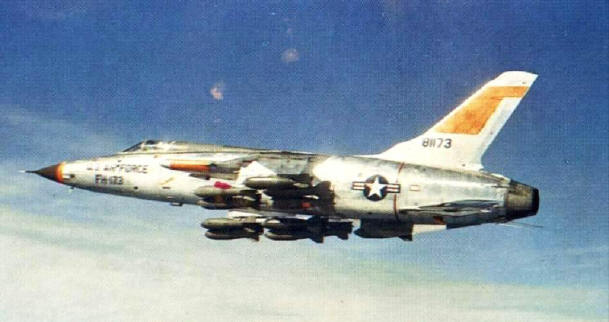
I used to love the Thuds, heavy with ordnance under the wings; Spad 21 you're following a C-5, reduce to final approach speed, what will that be? Spad 21 will be 250 knots to the lights. The 105 only did thrust vectoring one direction, via the tail pipe.


f105d-thunderchief.jpg
 
Isn't your scope incorrectly labeled? I believe the dashed line on the elevation indicator is the lower safety limit, and the solid line above it is the actual glide slope, which would put the depicted aircraft way too low for a safe approach.

198973_par_approach_radar_screen.jpg


That aircraft is still in level flight.

You're correct about the dashed line but as I see it it time to say: Approaching glideslope, wheels should be down. Followed by; Begin Decent.

All these years, I still got it!
 
Last -105s I remember were Reserve birds up at Hill. Early '80s. Saw then fly during an airshow and man were the epitome of loud. Only thing same were the -106s with the same engines, from Montana that sat in the alert barns at DMA up until the mid-80s.

Have PAR radars, scopes or the general system been upgraded all that much, or is what there is now, not much different equipment-wise from what it's always been?
 
Last -105s I remember were Reserve birds up at Hill. Early '80s. Saw then fly during an airshow and man were the epitome of loud. Only thing same were the -106s with the same engines, from Montana that sat in the alert barns at DMA up until the mid-80s.

Have PAR radars, scopes or the general system been upgraded all that much, or is what there is now, not much different equipment-wise from what it's always been?

Pretty much the same. At Tyndall we had the same • they were using in Vietnam. Some places (I know WRI does) now have a digital scope but same premise.
 

Attachments

  • image.jpeg
    image.jpeg
    69.6 KB · Views: 84
Last -105s I remember were Reserve birds up at Hill. Early '80s. Saw then fly during an airshow and man were the epitome of loud. Only thing same were the -106s with the same engines, from Montana that sat in the alert barns at DMA up until the mid-80s.

The 105's I worked were out of Carswell AFB in the Forth Worth area.

Up until 1982 the ANG at Fresno used F-106's for early warning. They had one two seater 106 which I rode in (I was an FAA controller then). Shortly after my ride the two seater blew a tire on landing, the gear folded and like all good aircraft enjoying their last landing it headed for the VASI's. The 106's at FAT were replaced with F-4's in late 1982 IIRC, after the PATCO strike so I no longer worked there.
 
198973_par_approach_radar_screen.jpg


That aircraft is still in level flight.

You're correct about the dashed line but as I see it it time to say: Approaching glideslope, wheels should be down. Followed by; Begin Decent.

All these years, I still got it!

Oh, I see. He hasn't hit the glide slope intercept, yet. Thanks.
 
Back
Top