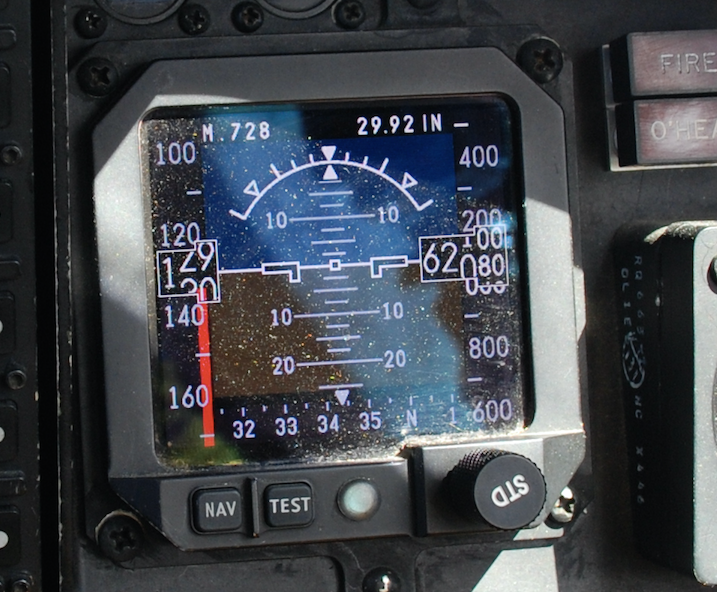
Fun times at Skywest

CRJ200=the next A321...

I can't believe it's being limited to FL280 though. That sounds extremely conservative. I'm continually amazed at how close the max and min speeds are in the Airbus at cruise, and have come to get used to it. In the CRJ guys were flipping out at speeds under 250 at altitude, even though the 1.3 stall speed wasn't even visible and our holding speed at altitude was, I think, 225.
 
Books? You still have books? Thank gawd for my company issued iPad and the search function. As an aside, does your company get in a tizzy for loading an unapproved app...like lyft ride sharing, on your iPad? I get tired of the nasty grams.
 
CRJ200=the next A321...

I can't believe it's being limited to FL280 though. That sounds extremely conservative. I'm continually amazed at how close the max and min speeds are in the Airbus at cruise, and have come to get used to it. In the CRJ guys were flipping out at speeds under 250 at altitude, even though the 1.3 stall speed wasn't even visible and our holding speed at altitude was, I think, 225.

If the stories were true about the incidents I heard when I was there, they have been very close to making the news a few times.
 
That'll be expensive. Maybe not as expensive as a hull loss and everything that goes with that. I think you guys need some more training or something.
 
never understood why climbing in speed mode wasn't mandatory?
This might just be an Eagle/Envoy, but the vast majority of pilots climb in VS. At least in the 145, I'm not sure about our heavy jets. I personally don't like speed mode on the 145. I find it to be uncomfortable often.
 
Restricting the maximum altitudes on the -200 to somewhere in the turboprop range (especially when the airframes already struggle to be profitable) isn't the kind of thing an airline does just because they're "concerned" about something, so there must have been some really interesting ASAP reports or FOQA data coming in to trigger those restrictions.
 
CRJ200=the next A321...

I can't believe it's being limited to FL280 though. That sounds extremely conservative. I'm continually amazed at how close the max and min speeds are in the Airbus at cruise, and have come to get used to it. In the CRJ guys were flipping out at speeds under 250 at altitude, even though the 1.3 stall speed wasn't even visible and our holding speed at altitude was, I think, 225.

Sharklets....You need 'em on the long-bus to get up there. Transcons start at 33/34.....then up to 35-36.....and if you're lucky 37 towards the end. Still is a pretty narrow margin though.
 
Kind of a sad/funny joke, the 700 at Eagle is called the heavy/widebody.

So like me hopping out of the 319 and saying "Hey! A 320! I'm surprised we don't have double bogeys for this fat bird!"
 
So like me hopping out of the 319 and saying "Hey! A 320! I'm surprised we don't have double bogeys for this fat bird!"

It's actually is an option. Some airlines that operate in hot/high/heavy load environments have double bogeys for the A320. Mostly in India...................


2158639.jpg
 
PSA had a high altitude stall event with several VERY large pitch oscillations that ended up flaming out both engines, and planting the FA on the ceiling. Fortunately the auto ignition came on during the stall event (as designed) and managed to get one engine restarted). The other engine was melted which involves something like 4000 C to do. The whole incident was very hush hush and two years later there is still no NTSB final report.

The CRJ200 can make it up to 38,000 (or was it restricted to 36,000? I can't remember any more). It can actually make it to 41,000. It just takes some really careful monitoring and number checking before you take it there. Regrettably, when some pilots run out of fingers and toes to count on, stuff gets kind of bad.

At 9E it was FL370 for the -200. Only saw that once when I was there. Middle of winter and we had about 15 passengers.

Remember, it was 9E that had one crash due to shenanigans getting a -200 up to FL410 on a ferry flight...


Personally, the -200 being restricted to FL280 in the summer is not going to hamper their operation that much anyway. Not like it will climb much beyond that in the summer. :cool:
 
Kind of a sad/funny joke, the 700 at Eagle is called the heavy/widebody.

On the other hand I've heard the 190 referred to as "The RJ" here many times.

So like me hopping out of the 319 and saying "Hey! A 320! I'm surprised we don't have double bogeys for this fat bird!"
Oh you'll get a kick out of the 321. Just don't pitch more than 7 degrees or you'll hit the tail.
 
Last edited:
PSA had a high altitude stall event with several VERY large pitch oscillations that ended up flaming out both engines, and planting the FA on the ceiling. Fortunately the auto ignition came on during the stall event (as designed) and managed to get one engine restarted). The other engine was melted which involves something like 4000 C to do. The whole incident was very hush hush and two years later there is still no NTSB final report.

The CRJ200 can make it up to 38,000 (or was it restricted to 36,000? I can't remember any more). It can actually make it to 41,000. It just takes some really careful monitoring and number checking before you take it there. Regrettably, when some pilots run out of fingers and toes to count on, stuff gets kind of bad.

FL410? "High altitude"?

Awwww, how cuuuute.

FL620_zpsz3xxwdcs.png
 
Personally, the -200 being restricted to FL280 in the summer is not going to hamper their operation that much anyway. Not like it will climb much beyond that in the summer. :cool:
Note the already lawn dart-like trajectory and limited climb performance on the Climb Restricted Jet.

(it's not like the 175 is a performance powerhouse neither, but I'll take it any day over the CRJ-200.)
 
PSA had a high altitude stall event with several VERY large pitch oscillations that ended up flaming out both engines, and planting the FA on the ceiling. Fortunately the auto ignition came on during the stall event (as designed) and managed to get one engine restarted). The other engine was melted which involves something like 4000 C to do. The whole incident was very hush hush and two years later there is still no NTSB final report.

The CRJ200 can make it up to 38,000 (or was it restricted to 36,000? I can't remember any more). It can actually make it to 41,000. It just takes some really careful monitoring and number checking before you take it there. Regrettably, when some pilots run out of fingers and toes to count on, stuff gets kind of bad.
I some how stumbled upon a picture that showed melted metal that was flowing out of the engine at one point.
 
Back
Top