Most affordable XCountry Bird

It would take you more time than that to determine whether you like a plane or not? :confused:

Well if tprops4me would qualify why the plane is a "dog", I mean one could call a 150/152 a dog under certain terms, but we all know it is a great trainer. I'm sure tprops4me must have flown the Sierra and many other planes in 150 hours (I know in my short 185 hours of flying I've flown about 3 different types of planes 150/72/Be24, so for me to really call the Sierra "The Best! plane ever" would probably be a stretch of the imagination for me).

The thread asks, "Most affordable XCountry Bird". A Beech Sierra is a comfortable, affordable (as always, get a great pre-buy on any plane), economical cross-country trainer. It is definitely not the fastest single piston engine plane out there, but it has a great useful load and gives you space to stretch.
 
Just curious, of the posters offering sage wisdom in this thread, how many own/have owned aircraft?

Also, how do the words "affordable" and "retract gear" fit together in the same sentence..
 
Well if tprops4me would qualify why the plane is a "dog", I mean one could call a 150/152 a dog under certain terms, but we all know it is a great trainer. I'm sure tprops4me must have flown the Sierra and many other planes in 150 hours (I know in my short 185 hours of flying I've flown about 3 different types of planes 150/72/Be24, so for me to really call the Sierra "The Best! plane ever" would probably be a stretch of the imagination for me).

The thread asks, "Most affordable XCountry Bird". A Beech Sierra is a comfortable, affordable (as always, get a great pre-buy on any plane), economical cross-country trainer. It is definitely not the fastest single piston engine plane out there, but it has a great useful load and gives you space to stretch.

Now that you mention it I have time in:
Cessna 140
Cessna 150
Cessna 152
Cessna 172
Cessna 182
PA 12
PA 18
PA 20
PA 22
PA28 151, 161, 181, 200r
*BE 24*
Swift
Super Viking
AA-1
AA-5
DV-20
DV-40
So, yes, I call the Sierra a dog. To be fair, at least the one I have time in. The sierra is a Sundowner with a folding gear. It is comfy, but slow. Not the best x-country machine. I know everyone has their favorites, and I did not mean to insult yours. My advice to you is to not fly the same hour every time. Go out and try new things. You might find another favorite. I know you have 35 hours more than I listed way back when.:sitaware:
 
Just curious, of the posters offering sage wisdom in this thread, how many own/have owned aircraft?

Also, how do the words "affordable" and "retract gear" fit together in the same sentence..

A Sierra can be had for $45-55K so that is where affordable comes in...

You do have a point though, since my father purchased a Sierra 2 years ago we have put some work into it. The previous owner did not keep things up as well as it should have been, and since our pre-buy was not a good pre-buy, we have spent a good sum to bring everything up to par (plane is great now). We were able to find all parts (from airframe to engine). Anyone who doesn't get a great pre-buy is welcoming the issues we had and needless to say airplane ownership is a learning experience.

Also, if not interested in a retract, there is the Beech Super 200 (Be23-34). Basically a Sierra without the retract and performs relatively well compared to the Sierra minus a few knots.
 
So, yes, I call the Sierra a dog. To be fair, at least the one I have time in.
Truth be told...

The sierra is a Sundowner with a folding gear. It is comfy, but slow. Not the best x-country machine.

Not so. A Sundowner has 20 less horsepower, no continuous speed prop. I am sure there are better x-country planes, but maybe not as affordable.


I know everyone has their favorites, and I did not mean to insult yours.
Better not have! The Sierra is my favorite "affordable" plane. Some of the planes you have listed are very nice too.


My advice to you is to not fly the same hour every time. Go out and try new things. You might find another favorite. I know you have 35 hours more than I listed way back when.:sitaware:

Good advice. It wouldn't be affordable right now...
 
Also, how do the words "affordable" and "retract gear" fit together in the same sentence..
I was a non-owning partner in a manual gear Mooney. I didn't own a share, but I paid half of all the expenses on it. At the same time, I was a member of a mid-sized flying club that operated two fixed gear Cessnas.

I saw the MX bills for the Mooney and the Cessna. The flying club spent more on MX for the Cessna gear (fixing wheel pants and rebuilding shimmy dampers) than we ever spent on the Mooney gear system. And that includes the additional cost at annual time to swing the gear. Insurance was within $100 or so of what it would have been for a fixed gear plane with a similar hull value. But we went a lot faster which translated into shorter trip times and lower fuel burn per trip. Therefore that translated into the retract being as cheap or even cheaper to own than a fixed gear airplane.

That will not be the case for all pilots and all retracts. But it is definitely possible to own and fly certain retracts for the same money as a fixed gear airplane if you choose the right airplane and perform the required preventive MX on schedule.
 
Now that you mention it I have time in:
Cessna 140
Cessna 150
Cessna 152
Cessna 172
Cessna 182
PA 12
PA 18
PA 20
PA 22
PA28 151, 161, 181, 200r
*BE 24*
Swift
Super Viking
AA-1
AA-5
DV-20
DV-40

Of this list.. How many do you have more than 10 hours in?

A Sierra can be had for $45-55K so that is where affordable comes in...

I'm not talking about upfront costs..

What do you pay for insurance, annuals, etc?


I saw the MX bills for the Mooney and the Cessna. The flying club spent more on MX for the Cessna gear (fixing wheel pants and rebuilding shimmy dampers) than we ever spent on the Mooney gear system.

How much did the Mooney fly compared to the Cessna?

Insurance was within $100 or so of what it would have been for a fixed gear plane with a similar hull value.

Was the insurance flying club's insurance and not an individual policy?
 
How much did the Mooney fly compared to the Cessna?
During the time I was involved, the Mooney probably flew about 350 hours per year. One of the Cessnas flew about 400 hours per year and the other probably flew about 200.


Was the insurance flying club's insurance and not an individual policy?
The insurance on the club planes was a club policy. But that's not what I was basing the comparison on. I was basing the comparison on the quotes the Mooney's owner got when he shopping for planes. He got quotes for the Mooney and quotes for a few other fixed gear singles in the same price range before he bought anything. The quotes were all very close to each other. And for those who are wondering, he had less than 200 hours and very little retract time if any when he bought the Mooney.
 
I'm not talking about upfront costs..

What do you pay for insurance, annuals, etc?

Insurance varies as you may be well aware, but the cost for an ATP owner and a PP on the policy is around $1500 a year. The annual was its first and a lot of things came up. But typically an annual can vary from around $1200 on up. The true cost of ownership of an older plane really depends on the individual machine and its previous upkeep and who you know with parts. To order a new bolt with a zerk fitting direct from Hawker/Beechcraft for a main landing gear bushing joint costs upwards of $900.00. You may/can find a perfectly good one from a salvage plane and be looking at $50.00. It all depends and really is hard to say what you are getting into on any particular plane.
 
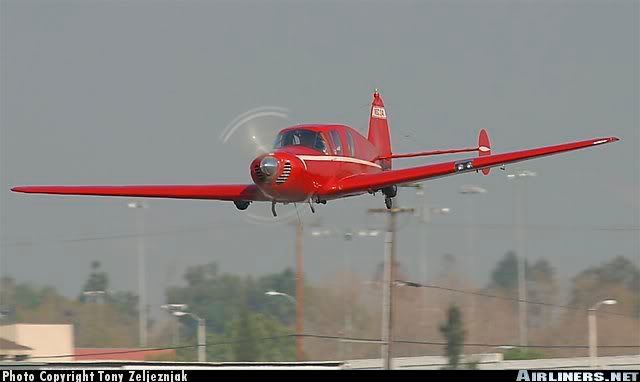
Bellanca's are exempt from my "nosewheel/horizontally opposed engine" diatribe. But, also available in Taildragger as well...

BellancaCruisemaster.jpg

Thanks I was going to say the Cruisemaster. Fantastic speed vs fuel flow. One of the best every produced and one of my favorites. The Viking is also a lot of bang for the buck. Mooney always has been a lot of bang too. I always loved flying the C-195 you described earlier, more room and load than the Mooneys or Vikings. For a New/Old plane, the Grumman Tiger is very over looked. More room than a 172, 10 kts faster and 3 gph less fuel.
 
The insurance on the club planes was a club policy. But that's not what I was basing the comparison on. I was basing the comparison on the quotes the Mooney's owner got when he shopping for planes. He got quotes for the Mooney and quotes for a few other fixed gear singles in the same price range before he bought anything. The quotes were all very close to each other. And for those who are wondering, he had less than 200 hours and very little retract time if any when he bought the Mooney.

Cool.. I guess I've learned something today.. When we were shopping for aircraft several years ago, insurance varied pretty widely between fixed and retract aircraft.. We had myself, my father and another guy on the policy and due to his low time, our rates were through the roof on several we looked at so we settled on a DA-40...

Insurance varies as you may be well aware, but the cost for an ATP owner and a PP on the policy is around $1500 a year.

Not too bad..
 
Cool.. I guess I've learned something today.. When we were shopping for aircraft several years ago, insurance varied pretty widely between fixed and retract aircraft.. We had myself, my father and another guy on the policy and due to his low time, our rates were through the roof on several we looked at so we settled on a DA-40...
Rates do indeed vary quite a bit based on both experience and type. Case in point, the previously mentioned Mooney guy. With two of us on the policy it was under $2k/yr. We were both under 500 hours total and neither of us had an IR at the time. He had more time in type than me. Then he got opportunity to become a non-owning partner himself in another Mooney. A very well equipped Ovation. But when they looked into insurance, that owners company wanted an additional $5k/yr to add him to the policy due to his low total hours, lack of IR and low time in specific model.

They wanted 1000+ total time, IR and 100+ in model before they could add him to the policy without a significant jump in premium. But then again, that was a high performance airplane with a hull value well North of $300k. For a late 60's or early 70's retract with 200hp or less, you should be able to find insurance that isn't a whole lot more than similarly priced fixed gear model.
 
Of this list.. How many do you have more than 10 hours in?

In hind sight, I probably could have saved myself a lot of typing by saying
"In my humble opinion the Sierra is a dog, and the Super Viking is my number one choice for affordable cross country machines."
I was just giving my opinion like everyone else. It's a public internet forum. Take everything how you will.

Tram,
As you can imagine I have less than 10 in most, but more than a few in some. It did not take me 10 hours to see performance differences in what I have flown. Comfort factor takes only one ride, so I can make a statement like "Having flown an hour in the Cessna 140 I do not like it because it made me feel like spam in a can. The PA 18 I flew next climbed like a rocket compared to the 140, and I was much more comfortable. That's why I think the 18 was a better choice for the tail wheel endorsement. The PA 12 gets better forward speed though." As you can see I have less than 10 hours in each of the planes listed, but have experienced them enough to make an educated statement. If that's what you were getting at. :confused:

If anyone has flown the Bellanca, and disagrees with my choice, I would love to talk about it (via PM). I love airplanes and try to fly different ones whenever the opportunity presents itself.

To Jonnydwolf:
There is a joke, and remember this is just a joke, that the only reason that people fly the Sierra is because they can't afford a Bonanza. No hard feelings I hope.
 
For a New/Old plane, the Grumman Tiger is very over looked. More room than a 172, 10 kts faster and 3 gph less fuel.
How is the Tiger on short fields? I know the Traveler that I flew needed a lot of earth to get off the ground, and if you were on grass it was only due to the curvature of the earth that you got up. Do the extra horses on the Tiger help it in that aspect?
 
For a New/Old plane, the Grumman Tiger is very over looked. More room than a 172, 10 kts faster and 3 gph less fuel.
Huh? 3 gph less fuel than what? A 172? A Tiger has an 180hp O360. Some 172s are 180hp but most are less. So how do you come up with 3gph less fuel burn in a Tiger? :confused:
 
The non-engine parts are going to cost a ton for each of these as well, no?

The 190/195 series machines have parts availability that is not bad - probably on par with nay Cessna product from the mid-50's (which was when they ceased production).

The Airmaster is actually a pretty simply airplane. Not much to break. Assuming the restoration has been done and the one-piece wood wing is good, then it is a simple machine. The 195 is a simple airplane. I would say that a 195 would be cheaper - firewall back - than a Bonanza, Commanche, or other contemporaries.
 
DA40's are very expensive and have a poor useful load with little fuel load (40 gallons). They burn quite a bit of gas and with a very high hull value, insurance is very expensive.

PA28-180's aren't bad. To tell you the truth it's probably the lesser of the evils. 140's are dogs unless you find one that has a 160 conversion.
 
DA40's are very expensive and have a poor useful load with little fuel load (40 gallons). They burn quite a bit of gas and with a very high hull value, insurance is very expensive.

What? They burn the same fuel as a late model 172, doing a good 20-30 knots more. They've got no less useful load than a comparable 172, and tend to cost right at about the same as a 172 from the same year. Plus, many hold 50 gallons. You might be right on the insurance cost, but take a look at NTSB reports on them. Very, very rarely do they involve post-impact fire's, unlike similarly constructed airplanes (Cirrus).
 
Back
Top