KC10/F15 Refueling

More than just one A-3. The tanker was dragging a basket because it was being escorted by F-104s which did not have a receptacle. Meanwhile TWO A-3s were hurting for fuel and a request went out for anyone with fuel. The A-3s had some fuel they could give away but little left before they flamed out. The tanker crew responded.

The two A-3s cycled on and off the tanker but like the commercial, WAIT! There's more. Two F-4s showed up also scosh on fuel. They refueled off the A-3s which were refueling off the tanker. And the -104s had to also cycle. In all 14 airplanes were refueled, 50,000lbs off loaded and now the tanker was below bingo for its base in Thailand. It recovered into Danang with just 10,000lbs which for a tanker was very low (my personal record was less than 6,000lbs after a SAR mission but that's another story)

The crew was awarded the McCay Trophy in 1968.

Well done there! I hadn't known the true depth of that mission. I'd forgotten that the F-104 was probe/drogue. IIRC, the F-100 was too, as was the A-37, and the F-105 was one of the only planes that could do both methods?

On the F-104, did they do much in the war?
 
4 aircraft to refuel at about 10 min per aircraft would take quite a while. Seems like the first guy to tank up would already burn a lot of what he took on by the time it was all said and done.
 
4 aircraft to refuel at about 10 min per aircraft would take quite a while. Seems like the first guy to tank up would already burn a lot of what he took on by the time it was all said and done.

Yep, that is true to some extent with a 4-ship or 6-ship, depending on the circumstances.

Often, the #1 aircraft will have to jump back on at the end to "top off".
 
Well done there! I hadn't known the true depth of that mission. I'd forgotten that the F-104 was probe/drogue. IIRC, the F-100 was too, as was the A-37, and the F-105 was one of the only planes that could do both methods?

On the F-104, did they do much in the war?

The -104 and the -100 as well as the RB-66 used a probe. Never refueled the first two but carried the limp weenie a few times for RB-66s.

The -37 had a probe but they didn't refuel in-country. What they did often do was shut down an engine enroute to the target and headed home for better fuel specifics. No other USAF airplane I have ever read about did that. On my single sortie in the A-37 down to IV Corps, I was in the right seat and yes, the pilot shut down the engine enroute.

The -105 has a probe but we never refueled any except with the boom. The big thing with the -105 was to ensure the transfer pumps were OFF before a disconnect because if there was any pressure, it would create a spray and the intake for the air cycle machine was close enough to the receptacle to take in some of the fuel spray. That didn't make for happy Thud drivers.

From THE authority, Joe Baugher
During the early days of Operation Rolling Thunder in 1965, North Vietnamese fighter aircraft became a problem for attacking USAF and US Navy strike aircraft. On April 3, 1965, three North Vietnamese Mig-17s attacked a strike package near the Dong Phuong Thong bridge and damaged a Crusader and then escaped unscathed. The next day, two MiG-17s attacked a flight of four F-105s and shot two of them down. In order to meet this new threat, an EC-121D College Eye unit was dispatched to extend radar warning coverage over NVN, and TAC was asked to deploy F-104s to escort the EC-121s over the Gulf of Tonkin and to provide a MiG screen for USAF strike aircraft over NVN.

In April of 1965, a single squadron (the 476th TFS) of the 479th TFW deployed with their F-104Cs to Kung Kuan AB in Taiwan, with regular rotations to the forward base at Da Nang Air Base in South Vietnam. Their job was to fly MiG combat air patrol (MiGCAP) missions to protect American fighter bombers against attack by North Vietnamese fighters. They flew these missions armed with their single M61A1 20-mm cannon and four AIM-9 Sidewinder air-to-air missiles. The effect of F-104 deployment upon NVN and PRC MiG operations was immediate and dramatic--NVN MiGs soon learned to avoid contact with USAF strikes being covered by F-104s. During the entire deployment of the 476th only two fleeting encounters between F-104Cs and enemy fighters occurred.

As the MiG threat abated, the 476th TFS was tasked with some weather reconnaissance and ground attack missions. A few of these were against targets in North Vietnam, but most of them were close air-support missions against targets in the South under forward air controller direction. The F-104s were fairly successful in this role, gaining a reputation for accuracy in their cannon fire and their bombing and capable of quite rapid reaction times in response to requests for air support. During this period, the 476th F-104s maintained an in-commission rate of 94.7%, a testimony both to the quality of 476th maintenance personnel and to the simplicity and maintainability of F-104 systems. However, an F-104 went down during a sortie 100 nm SSW of DaNang on June 29. The pilot was rescued with minor injuries.

The 436th TFS assumed the 476th's commitment in DaNang on 11 July, and the 436th began flying combat sorties the next day. Although a few MiGCAP missions were flown, the majority of the missions were quick-reaction close-air support missions in support of ground troops. On July 23, Capt. Roy Blakely attempted to crash-land his battle-damaged F-104C at Chu Lai. Blakely successfully set his aircraft down gear-up, but died when his F-104 swerved off the runway into a sand dune.

The 436th TFS had a bad day on September 20, 1965. F-104C pilot Major Philip E. Smith managed to get lost while flying an EC-121 escort mission over the Gulf of Tonkin. After several equipment failures and incorrect steering commands, he managed to wander over Hainan Island and was shot down by a pair of Chinese MiG-19s (J-6s). He ejected and was taken prisoner. While the rest of the squadron was out looking for Major Smith, two other F-104s had a midair collision while returning to their base. Both pilots ejected and were recovered unharmed.

A week later, another F-104C was shot down by enemy AAA, and its pilot was killed.

After these four losses, the remnants of the 435th were rotated back to George AFB in November of 1965 and the F-4Cs of the 390th TFS assumed the 435th's escort mission at DaNang. Although the F-104s had not shot down a single MiG, their mere presence as escort aircraft had diminished MiG activity to the point where MiGs were no longer considered as a primary threat to USAF aircraft flying missions over North Vietnam.

In the early months of 1966, the MiG threat began to re-emerge, with the supersonic MiG-21 beginning to appear. In response, a new contingent of F-104Cs returned to Vietnam in June of 1966 and were assigned to the Udorn base in Thailand. In the first deployment, eight F-104Cs of the 435th TFS landed at Udorn, Thailand on June 6, 1966. At the time of the F-104's second deployment to SEA, TAC was in the process of phasing-out the type, and the 479th TFW was in the process of converting to F-4 aircraft and they were attached to PACAF's 8th TFW. An additional 12 F-104Cs joined the 8th TFW on July 22.

They 8th TFW F-104s were initially involved in escort missions in support of F-105D strike aircraft hitting targets in North Vietnam. They were involved in escorts of EF-105F Wild Weasel. One of the problems was that the F-104Cs were not initally equipped with electronic countermeasures gear, and had to rely on F-105s for warnings of lock-ons from enemy radar facilities. However, once again the mere presence of these F-104Cs managed to keep enemy MiGs away from the strike packages.

On August 1, two F-104Cs were lost to enemy SAMs in a single day, and it was concluded that it was too dangerous to operate the F-104C in support of Wild Weasel missions, especially when they were not equipped with ECM gear. It was decided to withdraw the F-104C from support of strike missions over North Vietnam, unless and until the MiG threat reappeared. By late August, these F-104Cs were involved in airstrikes against targets in both Laos and South Vietnam, exchanging its role of air superiority for that of ground attack. However, losses were heavy, with three F-104s being downed by ground fire and SAMs in the next couple of months. The F-104C was not very well suited for the ground attack role, being incapable of carrying an adequately large offensive load. In addition, it could not carry out operations in bad weather and could not sustain a lot of battle damage.

By late 1966, all F-104s in Southeast Asia had received APR-25/26 RHAW gear under Project Pronto, and once again began flying escort missions over North Vietnam. The Starfighter took part in Operation Bolo on January 2, 1967, which was a successful attempt to lure North Vietnamese fighters into combat. However, the F-104s were not used to actively entice and engage MiGs, but were used instead to protect the egressing F-4 force. The F-4 Phantoms scored heavily during this engagement.

The Air Force decided to replace these F-104Cs by more efficient McDonnell F-4D Phantoms starting in July of 1967. The 435th was then rotated back to George AFB for the last time.

I don't believe that the F-104C ever destroyed a single enemy fighter during its tour of duty in Southeast Asia. In addition to the loss to MiGs over Hainan, two F-104s fell to SAMs, six to AAA and six were lost to non-combat causes.

Following the withdrawal of the F-104C from Southeast Asia in 1967, surviving F-104Cs were transferred to the 198th TFS of the Puerto Rico Air National Guard. The F-104Cs replaced that unit's elderly F-86H Sabre fighter-bombers.

 
The -37 had a probe but they didn't refuel in-country.

Here's an interesting question that this brings up: Obviously tankers operated out of Thailand, and there were tracks for fighters out of there and going into North Vietnam. Were there full-time AR tracks for planes operating in South Vietnam? Especially in the southern reaches around III and IV Corps? Or did planes operating in-country just rely on going back and forth from the numerous bases?
 
Here's an interesting question that this brings up: Obviously tankers operated out of Thailand, and there were tracks for fighters out of there and going into North Vietnam. Were there full-time AR tracks for planes operating in South Vietnam? Especially in the southern reaches around III and IV Corps? Or did planes operating in-country just rely on going back and forth from the numerous bases?

As I remember, there was a number of 'anchors' on the Thai/Cambodia and Thai/Laotion boders, Peach, Apple, Cherry and Walnut, again, as I remember. There were a few orbits in the northern part of South Vietnam, again I think they were red, white and blue. I can remember only flying one or two sorties over South Vietnam. NO orbits in III or IV Corps.

IF there was a big strike, we came out of U-Tapao, went north, crossed Laos and into Vietnam. We crossed just south of Danang and then would pick up our fighters, usually a gaggle of F-4s. We would drag them north to an orbit called the Purple North which sat between North Vietnam and Hainan Island. It was not uncommon to have a 5 tanker cell with 4-8 chicks on each tanker.

After we dropped the fighters off, we would head south to another orbit, the Purple South and wait for the fighters to egress. Once they were coming out we would plow back to the Purple North, drag 'em south and then head home. Usual fuel load was 165,000lbs out of U-Tapao.

This pdf shows the anchors on page 20. Anchors are not named. We usually picked the F-4s up in the mid 20s but the Thuds were often in the teens and one mission I remember being down around 16,000ft.
http://www.afa.org/Mitchell/reports/1204vietnam.pdf

The guys with THE mission I wanted was Fast FACs flying F-4s. Those guys would show up carrying a few pods of rockets and take on a full bag of gas and be back less than an hour later looking for fuel. Not an easy mission but FACing was a great mission in the 0-2 so I can not imagine how much better it just have been in an F-4.

Tankers are based at CCK in Taiwan, Andersen on Guam. In Thailand, most were at U-Tapao with some at Don Muang (Bangkok) and a few at Tahkli and Korat.
 
The guys with THE mission I wanted was Fast FACs flying F-4s. Those guys would show up carrying a few pods of rockets and take on a full bag of gas and be back less than an hour later looking for fuel. Not an easy mission but FACing was a great mission in the 0-2 so I can not imagine how much better it just have been in an F-4.

.

I would've loved to have flown slow FAC in the O-2 or OV-10. AS a FAC in the A-10, we were the best game in town after the OV's left, but the fast FAC guys in the F-16s had problems with legs as well as too much speed, when they were used as a FAC for troops/CAS. They made their money as FACs in the higher thread/deeper areas searching more for fixed targets; same as the F-100/F-4 Fast FACs did in North Vietnam, where the O-2s/OV-10s from South Vietnam couldn't really safely operate. It's funny how the mission types have never really changes, just the aircraft.......but the same problems have never really changed and have carried forward..
 
I would've loved to have flown slow FAC in the O-2 or OV-10. AS a FAC in the A-10, we were the best game in town after the OV's left, but the fast FAC guys in the F-16s had problems with legs as well as too much speed, when they were used as a FAC for troops/CAS. They made their money as FACs in the higher thread/deeper areas searching more for fixed targets; same as the F-100/F-4 Fast FACs did in North Vietnam, where the O-2s/OV-10s from South Vietnam couldn't really safely operate. It's funny how the mission types have never really changes, just the aircraft.......but the same problems have never really changed and have carried forward..

The O-1 was an excellent machine for the environment it operated in. Same with the OV-10. And as mentioned, the O-2 was essentially an interim airplane. That it operated out-country and in some hot areas amazes me. It was slow, noisy and not particularly agile. I personally wanted to burn off 1hr of fuel before directing a strike. Looking back on it, that probably didn't really make that much difference but it sure felt better.

I had a chance to visit an A-10 unit operating out in Afghanistan but could not find anyone who wanted the article so no sponsor, no approval from the USAF. These were the new C's with the upgrades. I thought it was a natural piece.. 40yrs later, same mission (moving mud near the good guys and 'neutralizing' the bad buys), just different environment and different machines.

Two of my classmates got O-1s and loved the airplane. Both were down in IV Corps and their war was completely different from mine. John was constantly called in for troops in contact and often had fighters stacked. I did only a few TICs. That is why I say there is no single war... it differs with the region, the unit and the time.
 
The O-1 was an excellent machine for the environment it operated in. Same with the OV-10. And as mentioned, the O-2 was essentially an interim airplane. That it operated out-country and in some hot areas amazes me. It was slow, noisy and not particularly agile. I personally wanted to burn off 1hr of fuel before directing a strike. Looking back on it, that probably didn't really make that much difference but it sure felt better.

I had a chance to visit an A-10 unit operating out in Afghanistan but could not find anyone who wanted the article so no sponsor, no approval from the USAF. These were the new C's with the upgrades. I thought it was a natural piece.. 40yrs later, same mission (moving mud near the good guys and 'neutralizing' the bad buys), just different environment and different machines.

Two of my classmates got O-1s and loved the airplane. Both were down in IV Corps and their war was completely different from mine. John was constantly called in for troops in contact and often had fighters stacked. I did only a few TICs. That is why I say there is no single war... it differs with the region, the unit and the time.

I love the O-1. Neat little airplane, and great for what it did, esp in a more permissive AAA/SAM environment. Were there psywar B-model O-2s operating in country then?

Funny you mention differing wars in different regions of the same country. I could imagine IV corps and I corps being very different, just looking at the terrain-type differences.....heck all over that country for that matter. Jungle to highlands to the river deltas.....all with their particular challenges and nuances.

TICs can be easy or hard, it all depends. Of the ones I've worked, I've had several flights of fighters to work only a few times.....mostly just one or two at a time, only had "the stack" twice......definitely a time where a high/low FAC helps out. Daytime, one could know how busy my sortie went by how marked up my canopy was from dry erase marker. One time when I showed up as the lead set of fighters myself for a ground FAC, I expended my ordnance, then went swing-role to air FAC for incoming fighters because the GFAC was busy being an infantryman, as they were that danger-close. Still, we've never had a war or combat since Vietnam where FACs have been as busy as they were over there.

Below: Cool Defense Dept photos of an O-2 taxiing in from a mission, and one overflying a USMC position in Vietnam.
 

Attachments

  • DF-ST-87-07845[1].jpg
    DF-ST-87-07845[1].jpg
    135.3 KB · Views: 105
  • DM-SN-82-04372[1].jpg
    DM-SN-82-04372[1].jpg
    255.2 KB · Views: 112
I love the O-1. Neat little airplane, and great for what it did, esp in a more permissive AAA/SAM environment. Were there psywar B-model O-2s operating in country then?

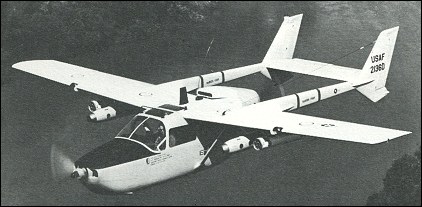
A classmate got an O-2B which was closer to the -337 than the A. The B had a prop spinner, NO pylons and it had a huge speaker on the left side as well as a chute to drop leaflets. I can't find a good picture of the B with the speaker in place. Anyway, in the B you could broadcast live or you could play a tape over the loudspeaker.

cessna_o-2.jpg


This is an early -A notable for a number of reasons. 1) the window does not wrap up like the one in your photo. That was a later mod and we got 3 or 4 of them before I left. It was a great improvement not having to fly stooped for 4.5 hrs. 2) the inboards are carrying SU mini-gun pods which were tested, approved and fairly quickly deleted. In fact, we were not allowed to carry anything other than white phosphorus warheads. Found with any other ord and we could be immediately grounded with possibility of losing wings. And the OV-10s in country had to fill out a lengthy report IF they used the guns in the sponsons. The TASG was very much against FACs shooting anything other than markers.

In the field, the TASG found that FACs wanted to be mini-fighters when equipped with the gunpods and that detracted from the mission and it got the FACs in trouble. Guys were getting hosed trying to be a mini-fighter.


Funny you mention differing wars in different regions of the same country. I could imagine IV corps and I corps being very different, just looking at the terrain-type differences.....heck all over that country for that matter. Jungle to highlands to the river deltas.....all with their particular challenges and nuances.

Quite true. We had the Rung Sat or the swamps south of Saigon as part of our AO; we also had jungle and large triple canopy stuff. In the muddy swamps sometimes there was not enough smash to trigger the warhead.

TICs can be easy or hard, it all depends.

One TIC the ground guys called and said the 105 howizter rounds were so close it was occasionally tossing some bits their way. I mentioned that if they were getting some tiny stuff, what were the bad guys getting. The commander said don't move it.. we will just dig in a bit more. We broke the contact.

Your second photo is very interesting in that it is an O-2A but with clean wings??
 
This is an early -A notable for a number of reasons. 1) the window does not wrap up like the one in your photo. That was a later mod and we got 3 or 4 of them before I left. It was a great improvement not having to fly stooped for 4.5 hrs. 2) the inboards are carrying SU mini-gun pods which were tested, approved and fairly quickly deleted.

The windows are a pretty neat modification....so simple, yet provided so much more ease, versatility, and overall vision. The O-2s in the pic also look pretty cool in the Euro I paint scheme. They're taxiing in from somewhere, but there's no location given on the photo.

In fact, we were not allowed to carry anything other than white phosphorus warheads. Found with any other ord and we could be immediately grounded with possibility of losing wings. And the OV-10s in country had to fill out a lengthy report IF they used the guns in the sponsons. The TASG was very much against FACs shooting anything other than markers.

In the field, the TASG found that FACs wanted to be mini-fighters when equipped with the gunpods and that detracted from the mission and it got the FACs in trouble. Guys were getting hosed trying to be a mini-fighter.

So no 2.75s with flechette warheads? Hell, not even HE?

You know whats funny....now that you mentioned it. We used to have OV-10s here in Tucson when I was growing up. We had two TASSs, one training and one operational. At the time, 22nd TASTS was OV-10s and was the FTU for FACs going to that airframe (the ops 23rd TASS was OA-37Bs at that time). Of all the OV-10s I'd see in the squadron there, be it the 22nd or even OVs from the 27th TASS at George that would come into DM.....of all the pics I have of them from the flightline, NONE of them have the 7.62s in their sponsons.......the sponsons are just empty except for the hardpoints underneath for the LAU-68/131 7-shot pods.

The TASG in country......was it the 504th? Trying to remember from my FAC history, but that was one of the biggest group-level organizations in the AF, what with the number of TASSs and Dets all around the four Corps tactical zones there.

VNAF had O-1s also, and I think they eventually received O-2s for the same role.

Your second photo is very interesting in that it is an O-2A but with clean wings??

Hard to tell, but it appears that there might be two empty hardpoints (the small black streaks under mid-wing in the photo. It doesn't appear to have any ordnance onboard though.
 
This is an early -A notable for a number of reasons. 1) the window does not wrap up like the one in your photo. That was a later mod and we got 3 or 4 of them before I left. It was a great improvement not having to fly stooped for 4.5 hrs. 2) the inboards are carrying SU mini-gun pods which were tested, approved and fairly quickly deleted.

The windows are a pretty neat modification....so simple, yet provided so much more ease, versatility, and overall vision. The O-2s in the pic also look pretty cool in the Euro I paint scheme. They're taxiing in from somewhere, but there's no location given on the photo, though it's 1985.

In fact, we were not allowed to carry anything other than white phosphorus warheads. Found with any other ord and we could be immediately grounded with possibility of losing wings. And the OV-10s in country had to fill out a lengthy report IF they used the guns in the sponsons. The TASG was very much against FACs shooting anything other than markers.

In the field, the TASG found that FACs wanted to be mini-fighters when equipped with the gunpods and that detracted from the mission and it got the FACs in trouble. Guys were getting hosed trying to be a mini-fighter.

So no 2.75s with flechette warheads? Hell, not even HE?

You know whats funny....now that you mentioned it. We used to have OV-10s here in Tucson when I was growing up. We had two TASSs, one training and one operational. At the time, 22nd TASTS was OV-10s and was the FTU for FACs going to that airframe (the ops 23rd TASS was OA-37Bs at that time). Of all the OV-10s I'd see in the squadron there, be it the 22nd or even OVs from the 27th TASS at George that would come into DM.....of all the pics I have of them from the flightline, NONE of them have the 7.62s in their sponsons.......the sponsons are just empty except for the hardpoints underneath for the LAU-68/131 7-shot pods.

The TASG in country......was it the 504th? Trying to remember from my FAC history, but that was one of the biggest group-level organizations in the AF, what with the number of TASSs and Dets all around the four Corps tactical zones there.

VNAF had O-1s also, and I think they eventually received O-2s for the same role.

Your second photo is very interesting in that it is an O-2A but with clean wings??

Hard to tell, but it appears that there might be two empty hardpoints (the small black streaks under mid-wing in the photo. It doesn't appear to have any ordnance onboard though.

Here's another pic of them parked in the field, in the dirt:
 

Attachments

  • DF-ST-85-12971[1].jpg
    DF-ST-85-12971[1].jpg
    218.6 KB · Views: 117
The O-2s in the pic also look pretty cool in the Euro I paint scheme. They're taxiing in from somewhere, but there's no location given on the photo, though it's 1985.

The Sleepytime FACs flew black O-2s but everyone else had the usual gray/white scheme.

So no 2.75s with flechette warheads? Hell, not even HE?

Today the fleschettes would probably be front page on the NYTs. Anyway, we had a fire base not far from our field and one night the bad guys decided they were going to overrun it. They had to cross about 300-500 meters of open terrain to get to it. NOT a good plan.

The fire base lowered the 105s to zero elevation and began firing flechette rounds. It was if they used a huge scythe. One of our FACs was awoken, launched and began working helicopter gunships and then the F-100s showed up with CBU. The bad guys were mauled badly.

As for HE, the helicopter gunships and the Cobras carried a lot of diff ord but not us. Willy Pete ONLY.

The TASG in country......was it the 504th? Trying to remember from my FAC history, but that was one of the biggest group-level organizations in the AF, what with the number of TASSs and Dets all around the four Corps tactical zones there.

The 504th was the Group and it was at Bien Hoa during my tour. The squadrons were
19th in III Corps based at Bien Hoa
20th at Danang I Corps
21st at Nha Trang in II Corps
22nd at Binh Thuy IV Corps
and 23rd TASS in Thailand working out-country.

VNAF had O-1s also, and I think they eventually received O-2s for the same role.
O-1s yes. O2s.. not while I was there.
 
Today the fleschettes would probably be front page on the NYTs. Anyway, we had a fire base not far from our field and one night the bad guys decided they were going to overrun it. They had to cross about 300-500 meters of open terrain to get to it. NOT a good plan.

The fire base lowered the 105s to zero elevation and began firing flechette rounds. It was if they used a huge scythe. One of our FACs was awoken, launched and began working helicopter gunships and then the F-100s showed up with CBU. The bad guys were mauled badly.

As for HE, the helicopter gunships and the Cobras carried a lot of diff ord but not us. Willy Pete ONLY.

Sleepytime were the guys over Saigon at night, IIRC. As past of history, we used to know the history of all the FAC callsigns; something new guys aren't trained in anymore. Everything from Rustic to Nail to Bilk to Copperhead to Sidewinder to Sundog, and everything inbetween.

Flechettes from zero elevation, point blank out of a 105 tube.....wow. Talk about devastation. That would be a bad day indeed.

What was your radio suite in the O-2? In the Hog, we had UHF, VHF, FM, UHF/FM secure, Have Quick I/II for UHF.
 
What was your radio suite in the O-2? In the Hog, we had UHF, VHF, FM, UHF/FM secure, Have Quick I/II for UHF.

UHF for the fighters on 262.1
VHF for the helicopters
and 40.6 FM for the ground troops and arty. We had a secure box for all and had a daily "KAK" wheel which we also seldom used except for verification of who we are talking to. Since the freqs didn't change, the gomers knew our freqs.

In one of the more funny efforts to confuse the enemy, 7th came down and said we (when I was in tankers) would no longer be Orange 51 flt with 52, 53, 54 and 55.. but we would have mixed call signs. All it did was confuse the cell and the receivers so guys dropped back into 'two' 'tree' 'forp' 'fife". And too, the ships off the coast of Guam and just off the runway at U-Tapao knew when we launched.

FACing was a great job and a poor learning tool in that it forced quick and good decision making but poor in that it lead me to believe the rest of the USAF operated on the same principles. Not so as I was to find out when exiled to SAC. Still, even SAC was a learning environment in that in the culture there were numerous groups and two distinct groups. One said a rule was a rule was a rule and it had to be followed even if made no sense. The other group knew the regs and knew how to bend them, if necessary while never breaking them and getting the job done. Funny too was how many majors and LtCols smoked small cigars a la LeMay.
 
Back
Top