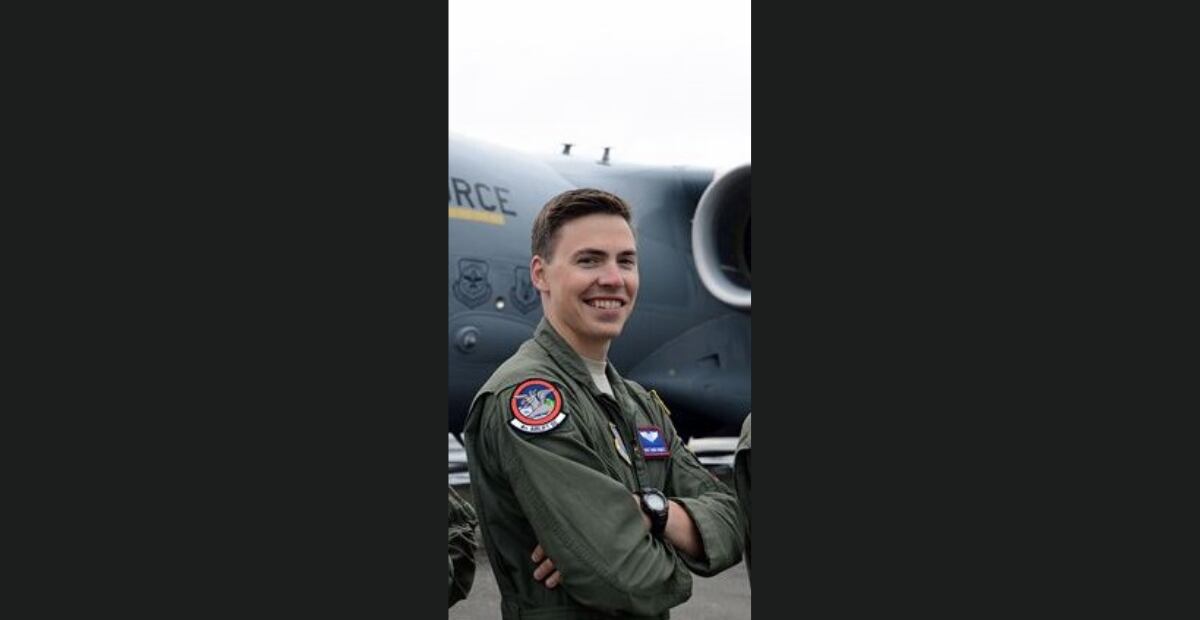
F-16 Down Pilot killed ejection seat malfunction

melax

Well-Known Member
June 30 2020

" The malfunction with the seat was first noticed in 2017 but a repair was deferred for three years until August 2020 because of a 'lack of available parts'. "

Now that's f&*ed up. Very upsetting that he died because of a "lack of available parts..." I just don't get this...
What kind of BS is this !
So if I read this correctly, instead of grounding the aircraft , it was deemed airworthy for 3 years with a known defective ejection mechanism. Does the responsibility fall on the crew chief ?
Just appalling.

 
Last edited:
Always take the dailymail with a big grain of salt, but...sounds damn awful. :(
The DM has it right, You can download the report from the following link:


F-16CM, T/N 94-0043, 30 June 2020 21
5. MAINTENANCE a.

Forms Documentation
The Air Force Technical Order (AFTO) 781 series of forms collectively provides maintenance, inspection, service, configuration, status, and flight record of the particular aerospace vehicle for which they are maintained (Tab BB-79 to BB-80). The AFTO 781 forms, in conjunction with the Integrated Maintenance Data System (IMDS), provide a comprehensive database used to track and record maintenance actions and inspection histories on each individual Air Force aircraft (Tab BB-79 to BB-80). A comprehensive review of the active AFTO 781 forms and IMDS historical records for the 30 days preceding the mishap revealed no recurring maintenance problems (Tabs D-2 to D-79 and U-40 to U-68).
b.

Time Compliance Technical Order (TCTO 11P2-3-502)
There were two related maintenance issues with the MA and the first was that Time Compliance Technical Order (TCTO) 11P2-3-502 (Installation of Shorting Plug on the DRS Electronic Module) was not completed on the MA prior to the mishap (Tabs J-13 and U-82). The shorting plug was designed to prevent noise bias issues observed in channel three of the three-channel system on the DRS (Tabs J-13 and V-18.1 to V-18.2). Two of the three channels must be in agreement for the DRS to function properly (Tabs J-13 and V-18.1 to V-18.2). DRS failure due to channel three noise bias issues have been observed in approximately 9% of all live ejections and sled tests (Tab J-13). TCTO 11P2-3-502 was issued on 20 January 2016 and was to be accomplished during the next scheduled 36-month ejection seat inspection (Tab U-99)
. The first opportunity to accomplish this TCTO was on 28 August 2017, but was not accomplished due to a lack of available parts (Tab U-99). The TCTO requirement was automatically deferred to the next 36-month seat inspection, which was 28 August 2020 (Tab U-99).
 
Last edited:
Off-topic a bit, but it looks like the pilot was initially on cargo transport (C-17) before moving over to fighters. How common is that?
 
Off-topic a bit, but it looks like the pilot was initially on cargo transport (C-17) before moving over to fighters. How common is that?

he was an enlisted loadmaster on C-17s before getting a commission and going to pilot training. Hence why he was a 32 year old O-2.
 
he was an enlisted loadmaster on C-17s before getting a commission and going to pilot training. Hence why he was a 32 year old O-2.

One of the first guys I did a ATP for when I was instructing was a former VTANG C130 loadmaster who got a flight slot on the F16. Callsign was Cargo.
 
I disagree about the finding regarding the Conference Hotel/X-Ray.

This seems pretty far from a normal white hat investigation report. The gear failure due to impact kicked everything off (and how much of that was pilot error and how much of that was "pilot" error is pretty debatable), but it seems like the incident was very survivable after that occurred and didn't go sideways until the SOF started trying to prioritize the airframe over the aircrew.

Would a seat malfunction like that be recoverable at a higher altitude?
 
This seems pretty far from a normal white hat investigation report. The gear failure due to impact kicked everything off (and how much of that was pilot error and how much of that was "pilot" error is pretty debatable), but it seems like the incident was very survivable after that occurred and didn't go sideways until the SOF started trying to prioritize the airframe over the aircrew.

Would a seat malfunction like that be recoverable at a higher altitude?

this isn’t the SIB, this is the AIB. SIB isn’t releasable and will never be seen publicly.

The initiating event was pilot error, as in, a perfectly good plane was on too low a glide path and impacted antenna structure on the ground. That was the initiating event. What killed the pilot was the seat malfunction that inhibited seat/man separation post-ejection. With that seat issue, Any ejection would’ve had a fatal outcome, whether in the air or on the ground; but this wasn’t known to anyone involved at the time.

I don’t think the SOF prioritized the aircraft, as an approach end arrestment is common procedure for a gear malfunction . I just think that a landing seemed like the safest course of action at the time. The SOF role varies during an IFE depending on the situation at hand and what’s being dealt with and with who. The finding on the CH is pretty out there regarding the SOF, and I’m curious why that would’ve been cited or considered applicable, especially if the investigating officer was a fighter background person and should know better.
 
With that seat issue, Any ejection would’ve had a fatal outcome, whether in the air or on the ground; but this wasn’t known to anyone involved at the time.

the article mentions a manual way to deploy the chute, but not enough time in this situation. Would it not be feasible to activate it manually from higher altitude?
 
the article mentions a manual way to deploy the chute, but not enough time in this situation. Would it not be feasible to activate it manually from higher altitude?

the manual chute release is on the right side of the seat, but it’s not normally used unless for some reason seat/man separation does not occur. There is not time to employ it from a ground level ejection unless you pull it just after leaving the cockpit. Which you’d never do because of the automatic system.

The manual chute release has a specific use time, and a time when it must be used or you won’t get a parachute, but this wasn’t that time for a ground level ejection.
 
the manual chute release is on the right side of the seat, but it’s not normally used unless for some reason seat/man separation does not occur. There is not time to employ it from a ground level ejection unless you pull it just after leaving the cockpit. Which you’d never do because of the automatic system.

The manual chute release has a specific use time, and a time when it must be used or you won’t get a parachute, but this wasn’t that time for a ground level ejection.

yeah I def wouldn’t expect it to be feasible from ground level. I was just asking cause you said that seat malfunction wouldn’t be survivable regardles of altitude, which surprised me.
 
Back
Top